
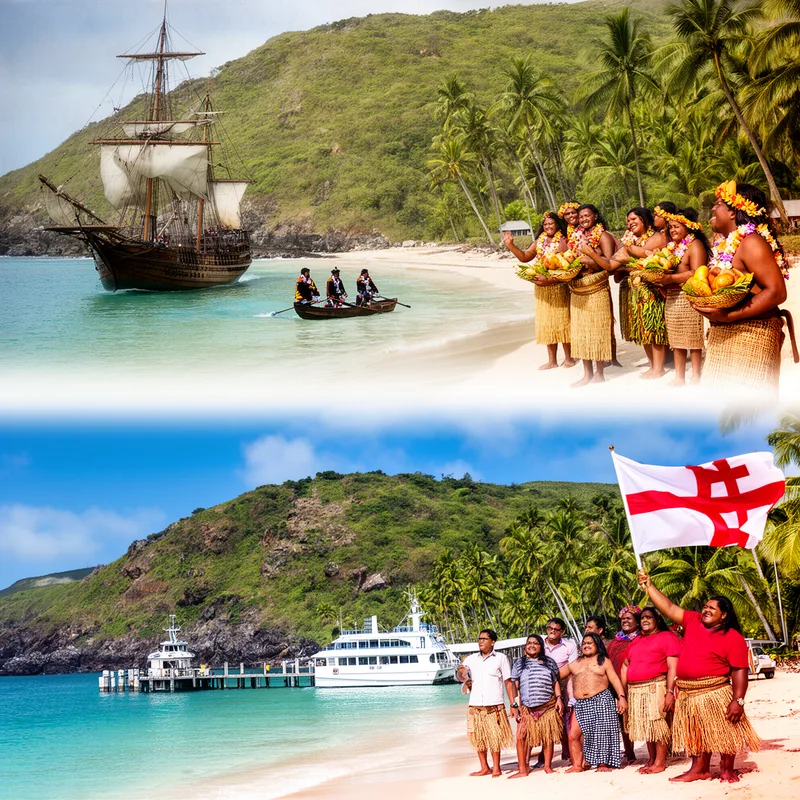
Friendly Islands
- proper noun
 :
Islas Amigables
:
Islas Amigables
- The Friendly Islands gained independence from British rule in 1970 and are now known as Tonga.
Examples
-
During his voyage, Captain Cook landed on the Friendly Islands and was welcomed by the local people.
-
Many 19th-century explorers wrote about their visits to the Friendly Islands in their travel journals.
-
The Friendly Islands are known for their stunning beaches.
-
Did you know that the Friendly Islands are part of Tonga?
-
During his voyage, Captain Cook landed on the Friendly Islands and was welcomed by the local people.
-
Many 19th-century explorers wrote about their visits to the Friendly Islands in their travel journals.
-
The Friendly Islands gained independence from British rule in 1970 and are now known as Tonga.
Synonyms
 9
2.7
9
2.7

An island country in Polynesia in the South Pacific Ocean

An island country in the South Pacific with a king
Surface Forms
Morphology
Friendly + island
The phrase transparently combines 'friendly' + 'islands', so a B1 learner who knows the words would easily infer a literal meaning of 'islands that are friendly'. However, its status as a specific historical proper name for Tonga is an arbitrary referent that cannot be predicted from the constituents alone, so the full, language-specific meaning requires prior exposure.
Etymology
Friendly Islands comes from Captain James Cook's visit long ago, when the islanders welcomed him warmly. He called them the Friendly Islands because the people were friendly, so the name means a place that greets visitors kindly and is now the name for 'Tonga'.