
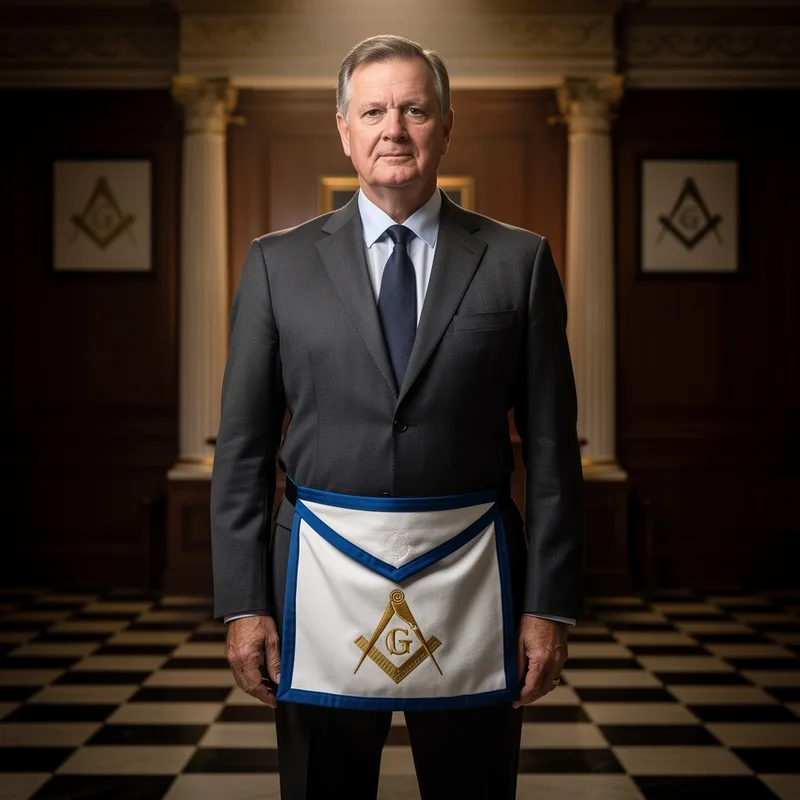
Freemason
 15
7.0
15
7.0

- noun
- /ˈfriːˌmeɪsən/
- Shortly after their arrival, the Graham brothers joined Solomon's Lodge, the recently reconstituted Freemasons of Georgia.
- Freemasons and Rosicrucians
- Freemasons and Jews
- Mozart was a Freemason
Loading YouTube…
Watch on YouTubeAnd I fact, in the earlier version, there's far more mentions of Freemasons than there are Jews.
- And I fact, in the earlier version, there's far more mentions of Freemasons than there are Jews.
- And I said, you know, I'm thinking about becoming a Freemason potentially.
- But there was also Freemasons that were in there like James Boswell.
- And in summary, being a Freemason is about the building of man, the how to become a better person.
- Yeah, That was Freemason. Yeah. What were we Went. What were we
- Golly told the Freemasons we'd bring down Trump with a shadowy bureaucratic coup.
- Nick Offerman Freemason We met on the level, we parted on the square.
- The hidden hand or the rogue elements of Freemason police officers in the Will command team finally see a chance to get me good on.
- If I had the chance to be in these like, Freemason meetings and we're all going to like, you know, drink blood from children or something, I'd have that blood.
Examples
-
The single qualification that is a basic requisite for becoming a Freemason is that one must believe in a Supreme Being.
Academic text (1993) -
The single quality espoused by a Freemason is trust and honesty.
Academic text (1993) -
I am no Freemason, nor a member of any club.
Academic text (2009) -
I mean, Washington really loved being a Freemason and go to the meetings.
-
Can I just say that being a Christian and Freemason is not uncommon here in Scotland?
Blog text (22) -
And I said, you know, I'm thinking about becoming a Freemason potentially.
-
To be a Freemason was cause for excommunication from the Roman Catholic Church.
Academic text (2007) -
I'd like to speak to you about the Freemasons if I might, sir.
-
The Freemasons among our Founding Fathers left us clues.
-
He decided to join the Freemason lodge to connect with like-minded individuals.
Synonyms
 4
6.7
4
6.7
A member of a group called the Freemasons who meet to help each other
Surface Forms
Morphology
Etymology
Freemason comes from two parts: free, meaning 'allowed to travel', and mason, meaning 'stone worker'. Long ago, skilled traveling stone workers formed close groups, and the name later came to mean someone who belongs to the fraternal society with secret rituals and mutual help.