
Faust
 15
9.8
15
9.8

- proper noun
- /faʊst/
- Literature
 :
Fausto
:
Fausto
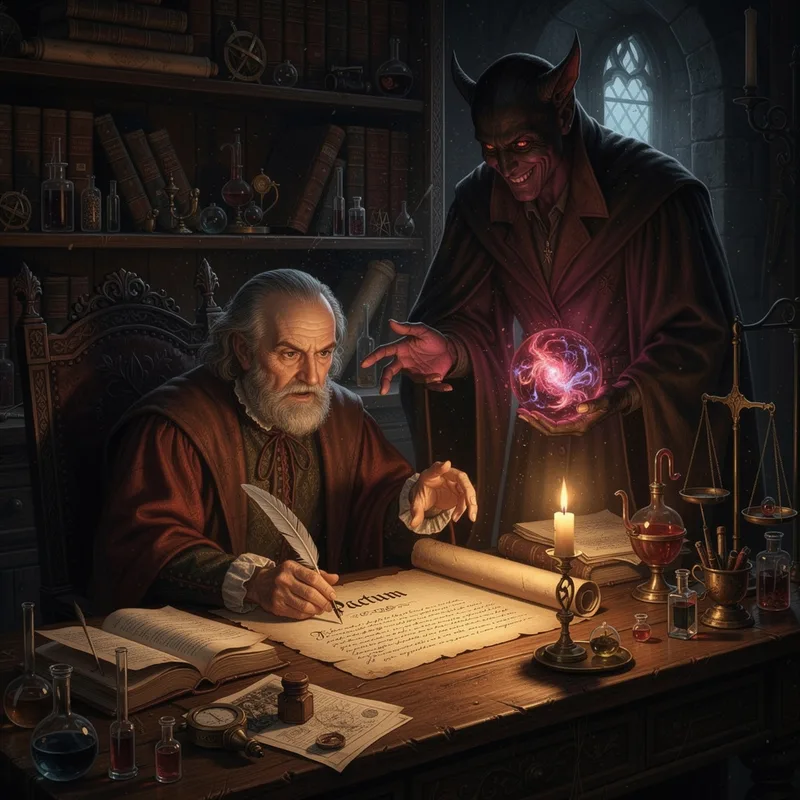
- The legendary tale of Faust involves a pact with the devil for knowledge.
- the Faust legend
- Goethe's Faust
- the Faust story
So Mephistopheles was laid out portrayed in Girthus Faust.
- So Mephistopheles was laid out portrayed in Girthus Faust.
Examples
-
Then the play began: the pact of Faust and Mephistopheles.
Fiction book (1993) -
The story of Faust in a modern setting.
-
About a German hero named Faust.
-
When I returned, the Faust production was in full swing.
Fiction book (1993) -
For the commission to do a great building, I would have sold my soul like Faust.
Academic text (2005) -
I felt at times like Faust: my wife and I had made a pact with the devil.
Fiction book (1991) -
Of course, Goethe himself took the longstanding legend of Faust and gave it dramatic and literary quality.
Academic text (2000) -
Goethe's poetic drama Faust highlights an imbalance between the functions of thinking and feeling.
Academic text (1998) -
In Goethe's famous play, Faust struggles with the consequences of his ambitions.
-
Many adaptations of Faust explore themes of temptation and redemption.
Synonyms
 13
9.3
13
9.3
A man who sells his soul to the devil to gain knowledge and power
Surface Forms
Etymology
Faust comes from an old German legend and from the Latin name Faustus, which means 'lucky', and it also matches the German word Faust meaning 'fist'. A helpful way to remember the story is to picture a man who grabs a dangerous deal and sells his soul for power or knowledge, which is why Faust now means someone who makes a dangerous bargain.