
Falange
- noun
- The legacy of the Falange continues to influence Spanish politics today.
Examples
-
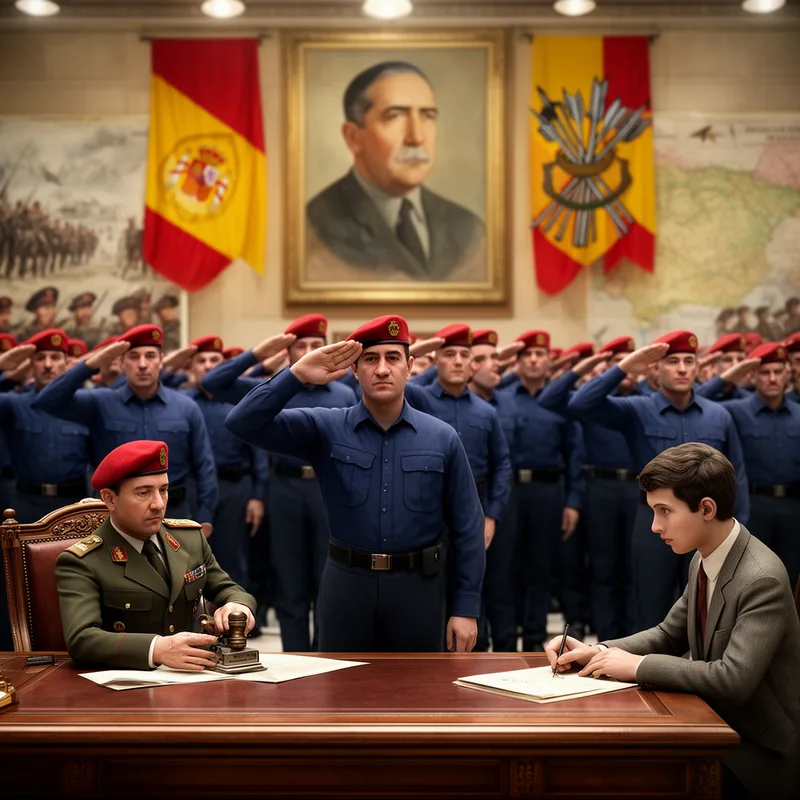
The Falange was a prominent political party during Franco's regime in Spain.
-
Many members of the Falange supported authoritarian policies and nationalistic ideals.
-
The names Falange and Comando Vermelho were then picked up by the press and have stuck since the 1970s.
Academic text (1996) -
Although journalistic reports of the scope of the Falange or Comando Vermelho should be read with skepticism, they nevertheless convey some sense of its power.
Academic text (1996) -
Because the leaders of the Falange or Comando Vermelho in the late 1970s and early 1980s were rooted in favelas throughout Rio, the growth of the drug trade in those communities naturally followed.
Academic text (1996) -
Both of these went into an envelope addressed, not to Peron, but to a young functionary of the Spanish Falange who had apparently been delegated to receive correspondence from Argentina on his behalf, thus circumventing local postal censorship.
Academic text (1993) -
Yes, the way white activists talk about oppression and have to immediately turn it into some sort of scientific spectrum, and talk about oppressed people like they're in some lab, is fucking stupid. But if some fascist bonehead with a pro-syndicate Falange philosophy tries to join my union,
Blog text (9) -
He had to mediate some conflicts between the fascists (Falange) and the Carlists, so after winning the war he made the two parties merge into the "FET y de las JONS."
Blog text (31)
Surface Forms
Etymology
Falange comes from an old Greek word phalanx, which meant 'a line of soldiers' and also 'finger', and the Spanish movement chose the name to sound like a tight, military-style group. That's why Falange today refers to the Spanish fascist political party, suggesting unity and force.

