
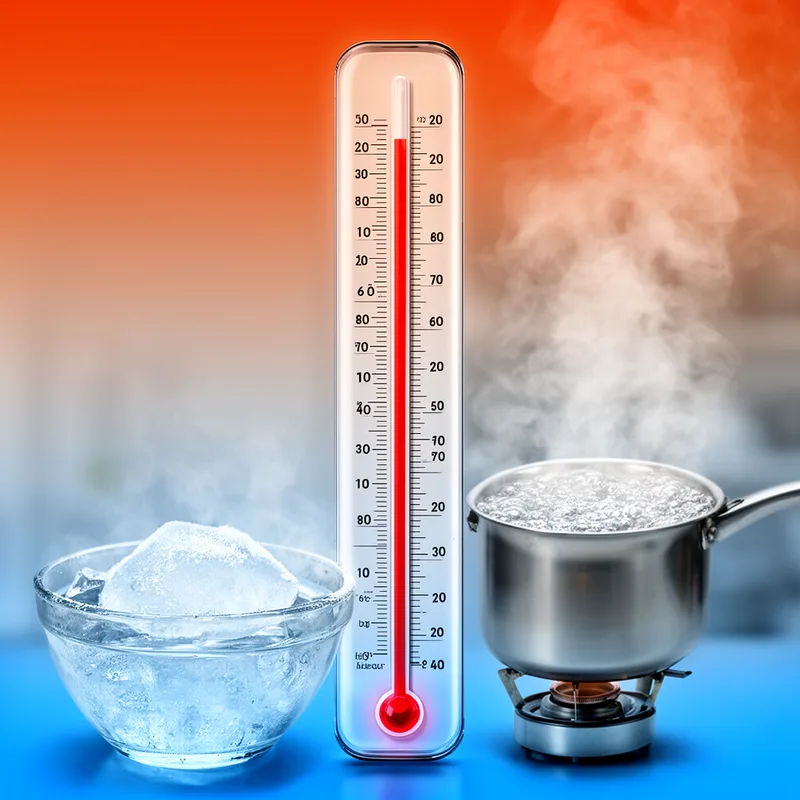
Fahrenheit
 1
3.9
1
3.9

- noun
- /ˈfɛrənˌhaɪt/
- That's 72 degrees fahrenheit.
- 60 Fahrenheit
- 140 Fahrenheit
Examples
-
Produce should be treated at about room temperature (68 Fahrenheit).
Academic text (1998) -
You know, we, we have wound up the planet by about two degrees Fahrenheit in the last century or so.
-
But here in the US, we are stubbornly still using Fahrenheit, F for Freedom for Fahrenheit.
-
That's so cold that it's the same temperature in both Fahrenheit and Celsius.
-
"Something like seventy-three or seventy-four Fahrenheit," Despreaux said with a laugh of her own.
Fiction book (2002) -
In the course of it, for the next ten hours or so, there might be slight variations in temperature: a centigrade down, a few fahrenheits up.
Fiction book (1993) -
Monitoring of the compost piles indicates that the mixture rapidly attains thermophilic temperatures (140 Fahrenheit to 165 Fahrenheit) within 24 to 48 hours.
Academic text (2001) -
The forecast predicts that it will reach 85 degrees Fahrenheit tomorrow.
-
When it dropped to 0 degrees Fahrenheit, everyone bundled up in warm coats.
-
Water boils at 212 degrees Fahrenheit under normal atmospheric pressure.
Synonyms
A scale for measuring temperature where water freezes at 32 degrees and boils at 212 degrees
Compounds
 28
3.1
28
3.1
A unit of temperature on the Fahrenheit scale used mainly in the United States
A scale for measuring temperature where water freezes at 32 degrees and boils at 212 degrees

Surface Forms
Etymology
Fahrenheit the noun is the temperature scale named for the scientist Daniel Gabriel Fahrenheit, and it measures heat in degrees where water freezes at 32 and boils at 212. So when someone gives a temperature in Fahrenheit, they mean that specific way of measuring temperature.