
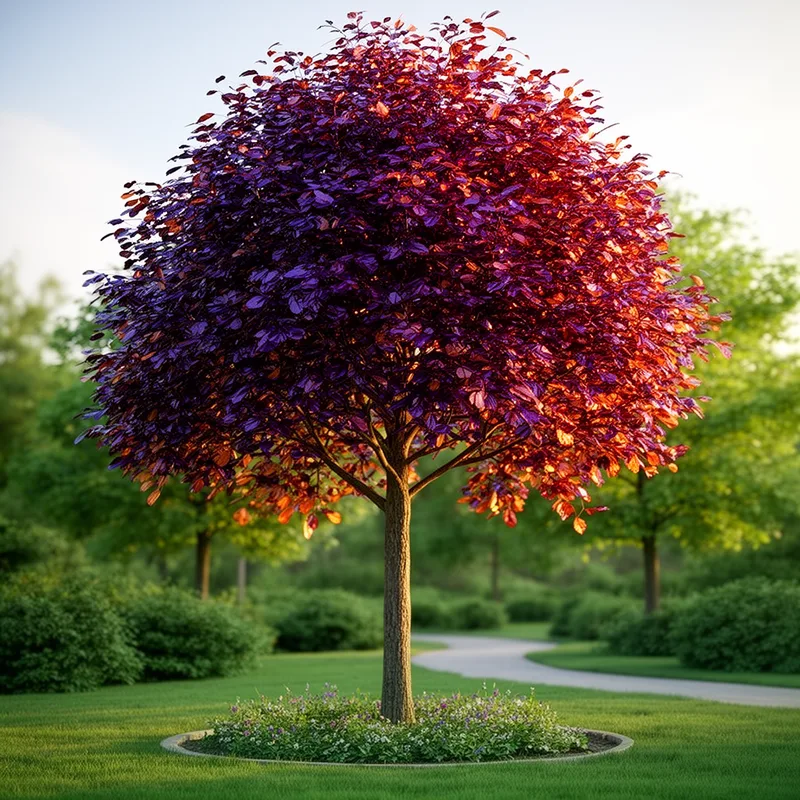
Fagus purpurea
- noun
- Specialized
- The leaves of the Fagus purpurea turn a brilliant metallic purple in the spring.
Examples
-
Many parks feature a majestic Fagus purpurea as a focal point of their landscape design.
-
The leaves of the Fagus purpurea glimmer with a rich copper hue during the autumn.
-
Gardeners prize the Fagus purpurea for its striking coloration and hardy nature.
-
The Fagus purpurea tree is known for its stunning foliage.
-
Many gardeners prefer Fagus purpurea for its vibrant color.
-
Gardeners prize the Fagus purpurea for its striking purple coloration and hardiness.
-
Many parks feature a majestic Fagus purpurea as a centerpiece of their landscape design.
Synonyms
A type of European beech tree with shiny purple or copper leaves
A cultivated beech tree with shiny purple or copper leaves

A large tree with shiny purple or copper leaves often planted in gardens

A type of tree with shiny purple or copper-coloured leaves often grown in gardens
Surface Forms
Morphology
Fagus + purpurea
This is a botanical binomial combining the genus name 'Fagus' (beech) with the epithet 'purpurea' (Latin for purple). If a learner knows both constituents (in particular that 'purpurea' means purple), the meaning 'a purple/copper‑leaved variety of beech' is directly and compositionally derivable, so the expression is transparent.
Etymology
Fagus purpurea comes from Latin: Fagus means 'beech' and purpurea means 'purple'. It was named this because the beech tree is grown for its shiny purple or copper-colored leaves, so the name points to its color.

