
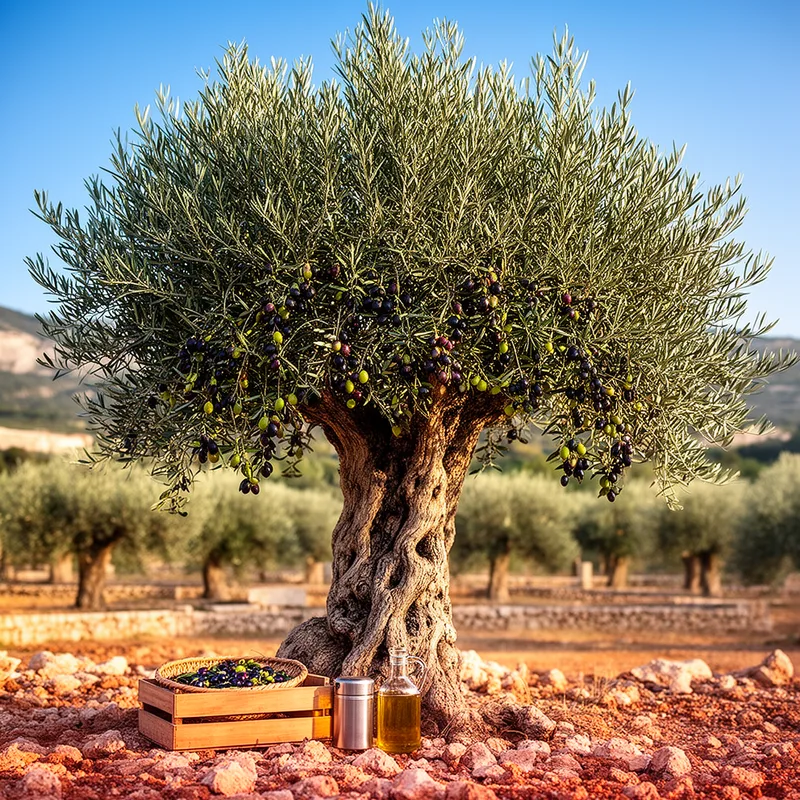
European olive tree
- noun
- The European olive tree thrives in dry, rocky soil and warm, sunny climates.
Examples
-
Farmers across Spain planted rows of European olive trees to harvest olives for oil production.
-
The ancient European olive tree in their yard is believed to be over three hundred years old.
-
The European olive tree thrives in sunny climates.
-
Many European olive trees can be found in Spain.
-
Farmers across Spain planted rows of European olive trees to harvest olives for oil production.
-
The European olive tree thrives in dry, rocky soil and warm, sunny climates.
-
The ancient European olive tree in their yard is believed to be over three hundred years old.
Synonyms

 40
1.0
40
1.0

A small evergreen tree that produces edible fruit and oil
 8
1.4
8
1.4
A small tree that keeps its leaves all year and makes olives for food and oil

An evergreen tree that produces olives used for food and oil
How Big

Surface Forms
Morphology
The phrase is fully compositional: a B1 learner who knows 'European' (from Europe), 'olive' (the olive tree/fruit) and 'tree' will understand it refers to an olive tree associated with Europe/the Mediterranean. This referential, non-idiomatic combination follows straightforward noun-modifier construction common across languages, so the meaning is immediately derivable from its parts.
Etymology
European olive tree links the place and the fruit: European shows where it grows and olive is the fruit the tree gives. People in the Mediterranean used its olives for food and oil for a long time, so the name came to mean 'the tree that makes olives'.