
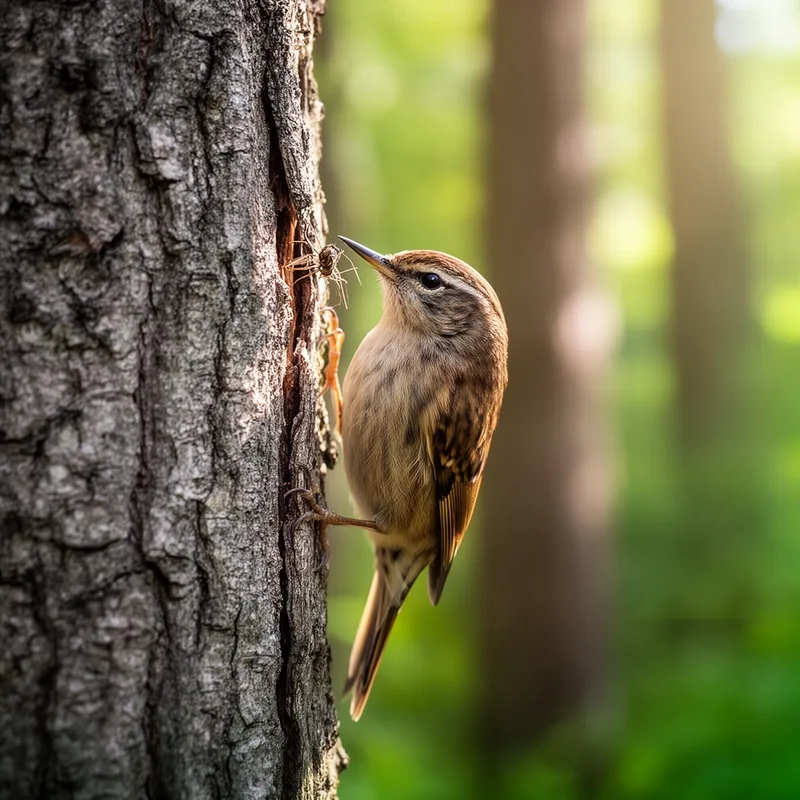
European creeper
- noun
- UK
- The European creeper is commonly seen spiraling up oak trees searching for insects.
Examples
-
A European creeper clung to the bark, blending in with its brown-and-buff plumage.
-
The European creeper is often found in woodlands.
-
Birdwatchers gathered to catch a glimpse of the elusive European creeper in the forest.
-
Have you seen a European creeper in your garden?
-
A European creeper climbed the tree, its brown-and-buff feathers helping it stay camouflaged.
-
During the spring, the European creeper can often be spotted foraging for insects among the tree trunks.
-
Birdwatchers are excited to observe the European creeper as it moves skillfully along the bark.
Synonyms

A small brown bird that climbs tree trunks to find insects

A small bird that climbs tree trunks using its stiff tail to find insects
A small bird that climbs tree trunks to find insects
Surface Forms
Morphology
The meaning is directly compositional: 'European' specifies geographic origin and 'creeper' names a small tree-climbing bird, so together they denote a creeper found in Europe. This adjective+noun pattern is a common, cross-linguistic modifier structure and would be immediately understandable to a B1 learner who knows both constituent words.
Etymology
European creeper comes from the bird's habit of moving slowly up tree trunks while looking for insects and staying close to the bark. The word creeper points to 'to creep', meaning to move quietly and stay near the bark, so the name describes the bird's behaviour.

