
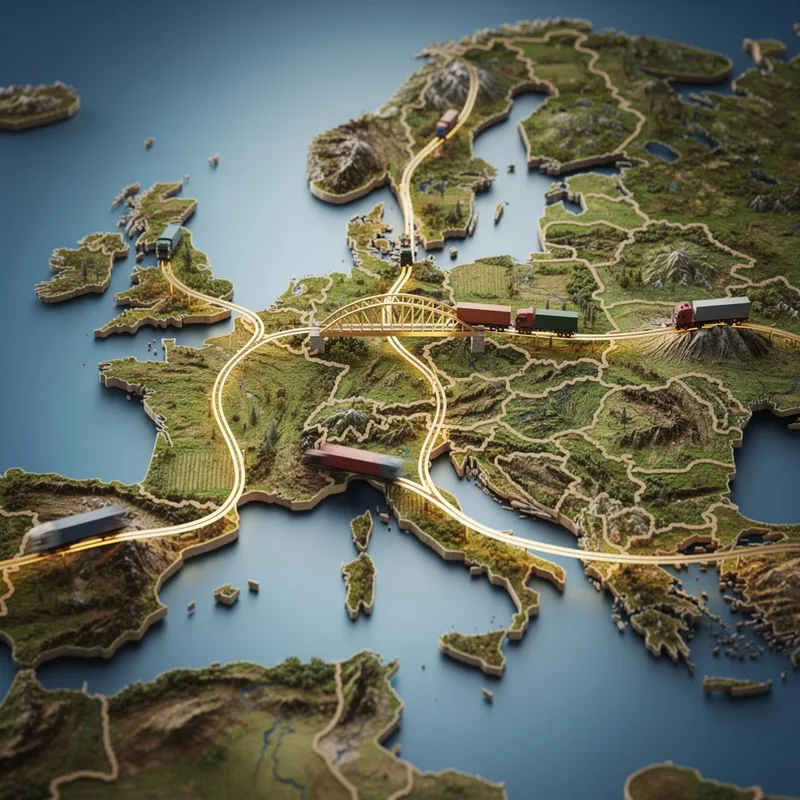
European Community
 19
3.7
19
3.7

- noun
- /ˌjʊərəˈpiːən kəˈmjuːnɪti/
 :
Comunidad Europea
:
Comunidad Europea
- All the East European nations want to join the European Community (E.C.) and the Council of Europe.
- membership in the European Community
- countries of the European Community
- European Community integration
Well, Europe may be disintegrating from the European Community.
- Well, Europe may be disintegrating from the European Community.
Examples
-
We heard from Mr. Ludolph that free labor markets are supposed to exist within the European Community.
Academic text (1990) -
Consider the confidence with which the European Community is embracing the promise of 1992.
Academic text (1991) -
And in any event, actual membership in the European Community is a long time coming for Eastern Europe.
Academic text (1991) -
The Federal Republic was a member of the European Community, as is the newly united country.
Academic text (1991) -
A few weeks later, however, the European Community reversed its decision.
Academic text (1991) -
In terms of relative acceptance, Africa has a positive balance only with the European Community.
Academic text (1990) -
For its part, the European Community provides everyone with some reassurance about Germany.
Academic text (1991) -
Essentially, the European Community Commission is, in its social policy branch, labor dominated.
Academic text (1990) -
Later on, England, Ireland, Denmark, Spain, and Portugal also joined the European Community (Gediko, 2005).
Academic text (2011) -
The European Community was formed to foster economic cooperation among its member states.
Synonyms
 28
5.8
28
5.8
A group of European countries that work together to remove trade barriers and make common rules
 4
3.7
4
3.7
A group of European countries that removed limits on trade and worked together economically
 1
5.2
1
5.2
A group of European countries that worked to reduce trade barriers
 1
4.3
1
4.3
An organization of European countries set up in 1957 that later became the European Union
Surface Forms
Morphology
The meaning ‘an organization or group of European countries cooperating’ is directly derivable from combining 'European' (connected with Europe) and 'community' (a group or association), so the basic concept is compositional. Although it names a specific historical/political entity (which a learner might not know in detail), the general sense is transparent and cross‑linguistically obvious to a B1 learner who knows the constituents.
Etymology
European Community came after World War II when many countries wanted to work together like neighbours: European shows the region and Community suggests a group sharing rules and trade. That's why the term meant countries working together on trade and later became the core of the 'European Union'.