
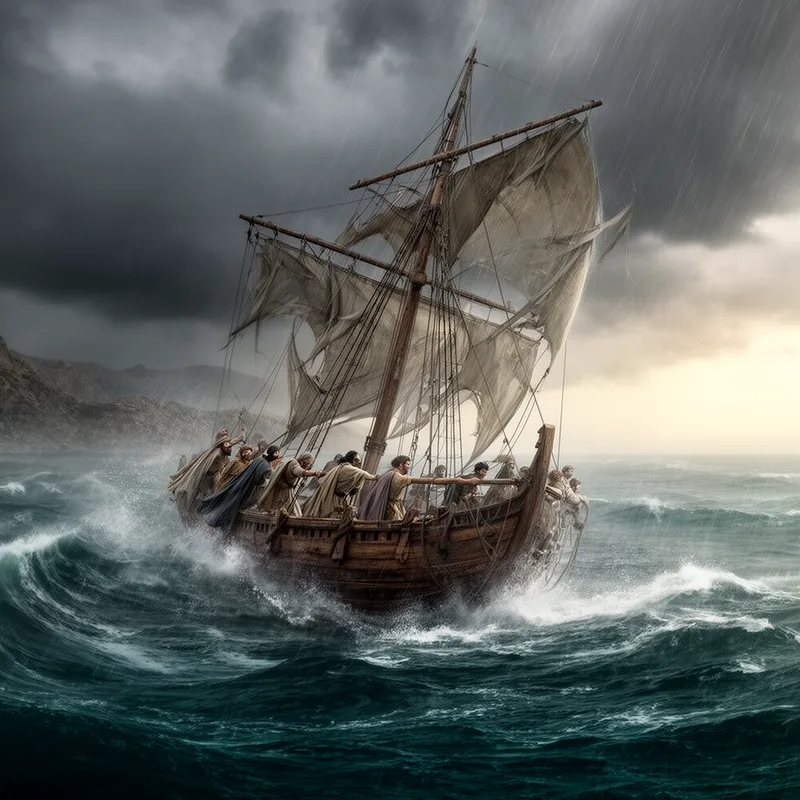
Euroclydon
- noun
- /ˌjʊərəˈklaɪdɒn/
- Archaic
 :
euroclidon
:
euroclidon
- The sailors dreaded the sudden force of a Euroclydon while crossing the Mediterranean Sea.
Examples
-
The Euroclydon struck suddenly.
-
Legends describe the Euroclydon as a powerful wind feared by mariners in biblical times.
-
According to the ancient text, a Euroclydon struck the ship and drove it off course.
-
The sailors feared the Euroclydon that was approaching.
-
During their journey, the sailors were terrified by the violent northeast wind known as Euroclydon.
-
The ship struggled against the powerful Euroclydon as it wreaked havoc on the waters.
-
In the Bible, the Apostle Paul recounts how he faced the fierce Euroclydon during his voyage.
Synonyms

 11
8.8
11
8.8

A very strong storm with winds that can damage things
 8
3.0
8
3.0
A storm with very strong winds that can cause damage
Surface Forms
Etymology
Euroclydon comes from Greek parts Euro- meaning 'east wind' and -clydon meaning 'wave' or 'surge', so the word literally names a violent sea storm. That's why in the Bible a Euroclydon is the powerful wind that drove ships off course in the Mediterranean.