
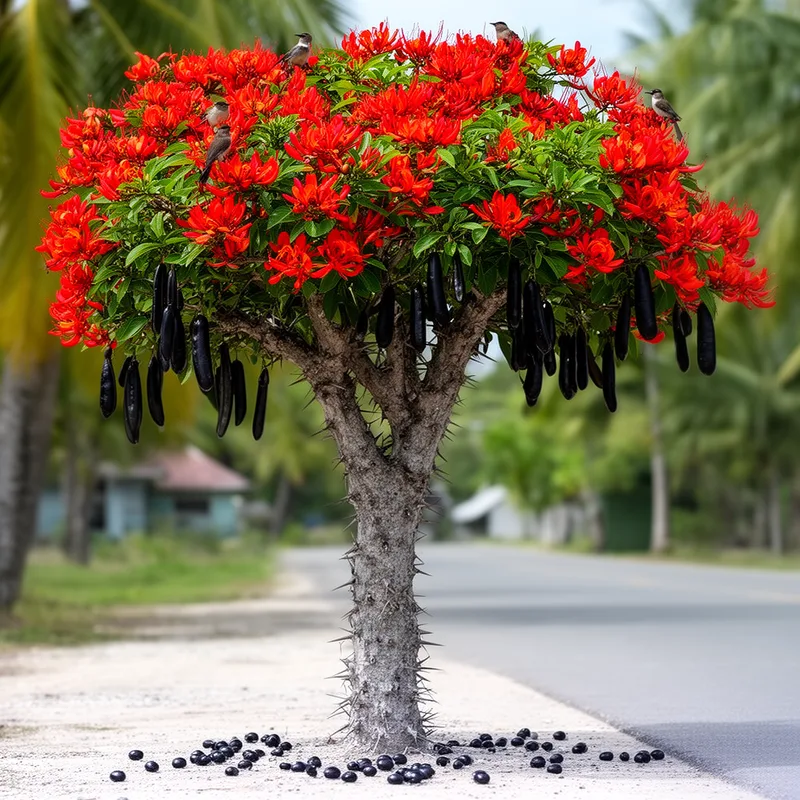
Erythrina variegata
- noun
- Australian
- The Erythrina variegata is often planted along roadsides for its striking appearance.
Examples
-
The Erythrina variegata tree is known for its beautiful scarlet flowers that bloom in clusters.
-
The wood of Erythrina variegata is sometimes used for light construction work.
-
Local birds are attracted to the Erythrina variegata when it blooms in spring.
-
The Erythrina variegata tree blooms vibrantly in the summer.
-
Have you seen the Erythrina variegata in the botanical garden?
-
In tropical gardens, the Erythrina variegata is a popular choice due to its vibrant blooms and thorny branches.
-
Many people admire the Erythrina variegata for its unique black seeds and striking red flowers.
Synonyms

A small or medium tree with sharp thorns, bright red flowers and black seeds
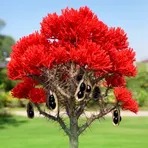
A small to medium thorny tree with thick bunches of bright red flowers and black seeds
Surface Forms
Morphology
Erythrina + variegata
This is a Latin binomial (a species name) functioning as a proper noun, so its detailed meaning ('a thorny tropical tree with scarlet flowers and black seeds') is not compositionally derived in a way a B1 learner would predict from the surface constituents. While etymological hints (eryth- = red, variegata ≈ variegated) exist for speakers with morphological or Latin knowledge, that knowledge is specialist; therefore the name is effectively opaque to an average B1 learner who only knows the listed words.
Etymology
Erythrina variegata may get its name from words meaning 'red' and 'varied': Erythrina points to its bright red flower groups and variegata to the mixed colours or patterns on its leaves and bark. That's why the name fits this small thorny tree known for its showy red blooms.

