
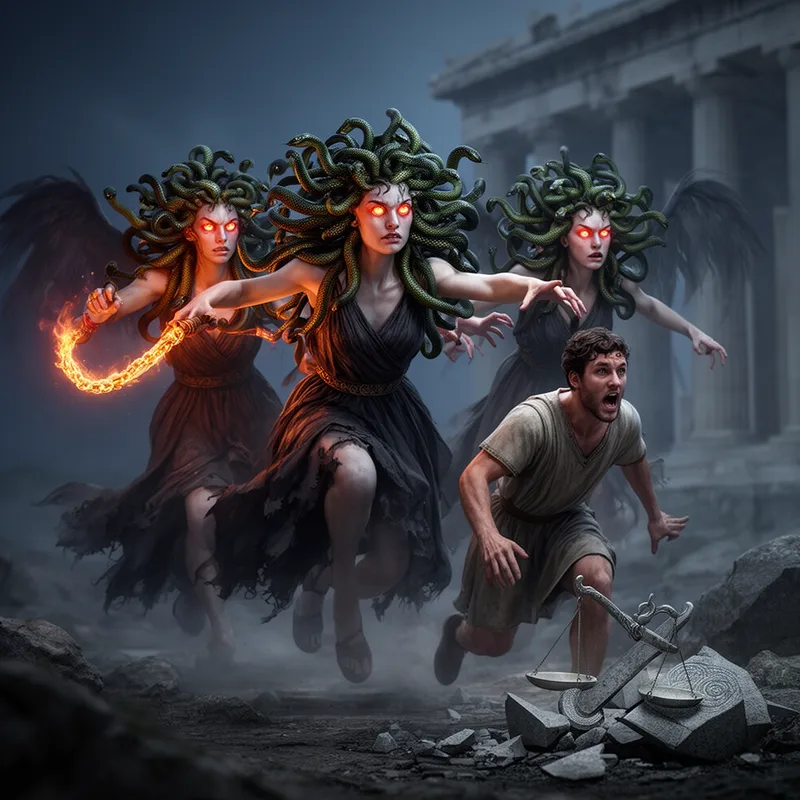
Erinyes


 1
9.9
- noun
- /ˈɛrɪniˌiz/
- Literature
- Although Athena had cleared his good name after he killed his mother, he was still pursued by the Erinyes.
Examples
-
The Erinyes are often depicted as fearsome avengers, seeking out wrongdoers without mercy.
-
In Greek mythology, the Erinyes are known for pursuing and punishing those who commit terrible crimes.
-
But the vengeful Erinyes play a more personal and threatening role in her life.
Academic text (1993) -
She feels at home, as it were, with Oedipus, the sphinx, and the Erinyes.
Academic text (1993) -
If anyone asks Erinyes who he voted for, he's going to tell them: "Roseanne Barr and Cindy Sheehan."
Blog text (22) -
Classical allusions to Oedipus, the Oresteia, the Erinyes, Demeter, and Persephone further underscore the sense of tragic irony.
Academic text (1993) -
Tragic and mythical figures are metaphorical presences in his work: Oedipus, Agamemnon, Ulysses, Persephone, the Erinyes.
Academic text (1993) -
There are allusions to other figures: the Erinyes vengefully pursuing the guilty, Agamemnon murdered by his wife Clytemnestra, and the keen memory of his having sacrificed their daughter Iphigenia.
Academic text (1993) -
In many tales, the Erinyes torment the guilty until they seek redemption or justice.
Synonyms
 1
9.9
Three fierce goddesses with snakes in their hair who pursue and punish people for murder
Surface Forms
Etymology
Erinyes comes from the old Greek word erinys, which means 'anger' or 'revenge' and was the name for the Furies, the spirits who punished people for serious wrongs. So, Erinyes today refers to those terrible, relentless punishers who hunt down wrongdoers.