
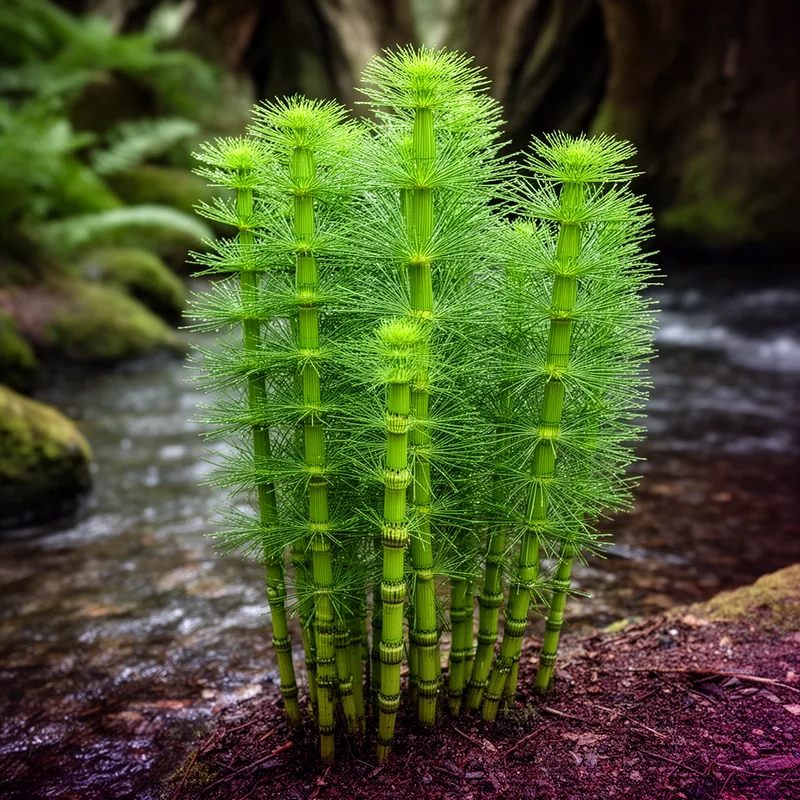
Equisetaceae
- noun
- /ˌɛkwɪˈsɛteɪʃiˌi/
- Specialized
- The Equisetaceae are easily recognized by their jointed stems and distinctive brush-like appearance.
Examples
-
Fossil records show that Equisetaceae were once much more diverse and widespread than they are today.
-
Modern Equisetaceae are found mostly in damp environments around the world.
-
The Equisetaceae family includes species like the common horsetail.
-
Did you know that Equisetaceae are among the oldest plants on Earth?
-
The Equisetaceae family includes various species commonly known as horsetails.
-
Horsetails, belonging to the Equisetaceae family, thrive in wetland environments.
-
In biology class, we studied the Equisetaceae, emphasizing its role in ancient ecosystems.
Synonyms
A group of plants with jointed, rough stems that grow near water
Surface Forms
Morphology
Equisetaceae = Equisetum (semi-transparent) = Equisetum + aceae
Formed by the genus name 'Equisetum' plus the standard botanical family suffix '-aceae'; clear within scientific taxonomy but not obvious to average learners.
Etymology
Equisetaceae comes from Latin parts: equi- meaning 'horse' and seta meaning 'bristle', with -aceae showing it is a 'plant family'. A helpful way to remember it is to think of the common name 'horsetail' — these plants have jointed stems and a brush-like top, so Equisetaceae is the family name for those horsetails.

