
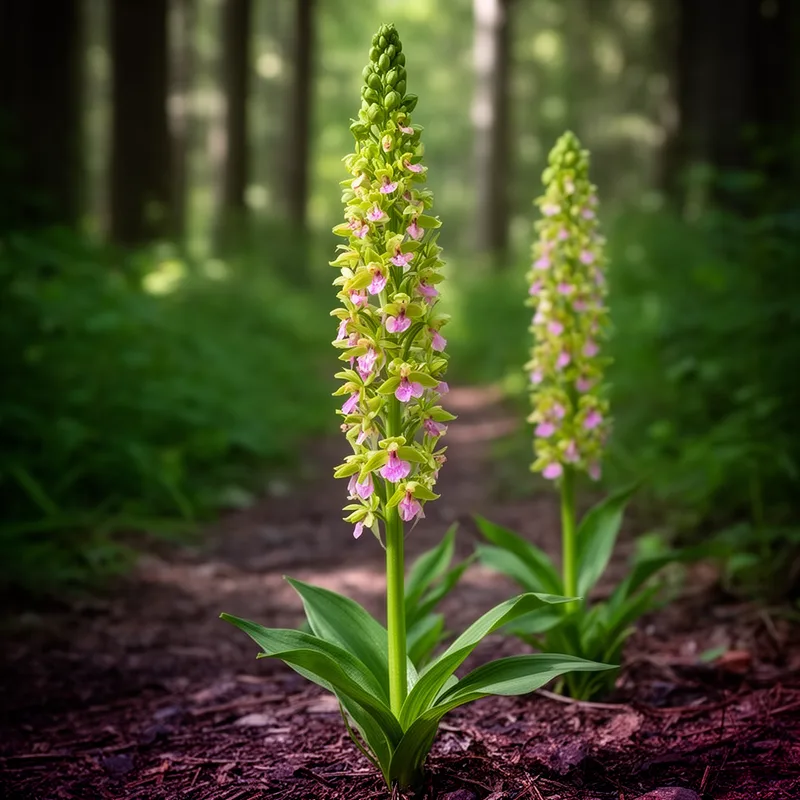
Epipactis helleborine
- noun
- Specialized
- The woodland path was lined with Epipactis helleborine in full bloom, adding delicate color to the greenery.
Examples
-
Researchers studied the pollination habits of Epipactis helleborine to better understand orchid adaptation.
-
Many gardeners value Epipactis helleborine for its resilience and ornamental flower spikes.
-
The Epipactis helleborine blooms in late spring.
-
Have you seen an Epipactis helleborine in the forest?
-
The woodland path was lined with Epipactis helleborine in full bloom, adding delicate color to the greenery.
-
Many gardeners value Epipactis helleborine for its resilience and ornamental flower spikes.
-
Researchers studied the pollination habits of Epipactis helleborine to better understand orchid adaptation.
Surface Forms
Morphology
This is a scientific binomial composed of a genus name (Epipactis) and a species epithet (helleborine); if a learner already knows that Epipactis is a genus of orchids and helleborine refers to an orchid found in woodlands, the combined form transparently denotes a particular orchid species. Binomial naming is a regular, cross-linguistic scientific convention, so the overall meaning follows directly from the constituents rather than being idiomatic.
Etymology
Epipactis helleborine may come from old Greek and Latin words: Epipactis suggests 'upon' because some orchids grow on roots or wood, and helleborine means 'like hellebore', a wild plant with similar leaves. So the name paints a picture of a woodland orchid growing among trees with hellebore-like leaves, which helps explain why it is a common forest flower.

