
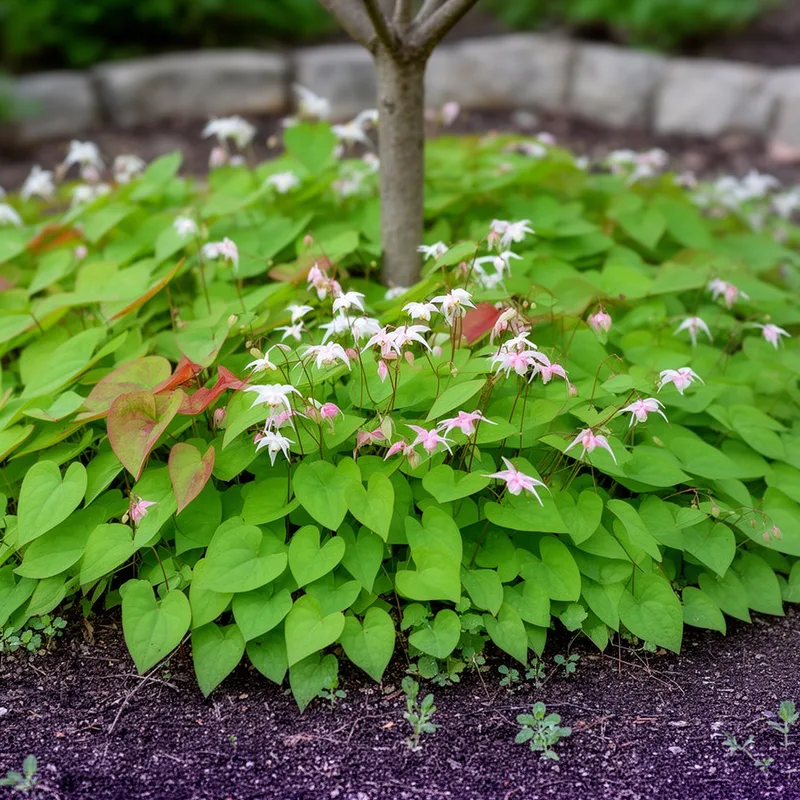
Epimedium grandiflorum
- noun
- Specialized
- Gardeners often plant Epimedium grandiflorum for its attractive foliage and delicate spring flowers.
Examples
-
Thanks to its creeping habit, Epimedium grandiflorum works well as a ground cover beneath trees.
-
The shady border of her garden was filled with Epimedium grandiflorum to help suppress weeds.
-
The garden features beautiful Epimedium grandiflorum as ground cover.
-
I planted Epimedium grandiflorum to enhance the shade area.
-
Gardeners often plant Epimedium grandiflorum for its attractive foliage and delicate spring flowers.
-
Thanks to its creeping habit, Epimedium grandiflorum works well as a ground cover beneath trees.
-
The shady border of her garden was filled with Epimedium grandiflorum to help suppress weeds.
Synonyms



 1
9.9
1
9.9
A slow-growing plant with thin stems and leaves that stay green most of the year used as ground cover

A low, slow-growing plant with leaves that stay green part of the year and cover the ground
Surface Forms
Morphology
Epimedium + grandiflorum
This is a botanical Latin binomial composed of a genus name (Epimedium) and a specific epithet (grandiflorum, lit. ‘large‑flowered’). If a learner knew both constituents and recognized the Latin roots they could infer it denotes a large‑flowered Epimedium, but an average B1 learner will not know the Latin epithet and so the meaning is only partially transparent.
Etymology
Epimedium grandiflorum is a Latin plant name that gives a clear picture: grandiflorum means 'large-flowered', so imagine a low, creeping plant with quite big spring flowers. That's why the name helps gardeners remember it as a slow ground cover with attractive leaves and blooms.