
Epilachna
- noun
- /ˌɛpɪˈlæk.nə/
- Specialized
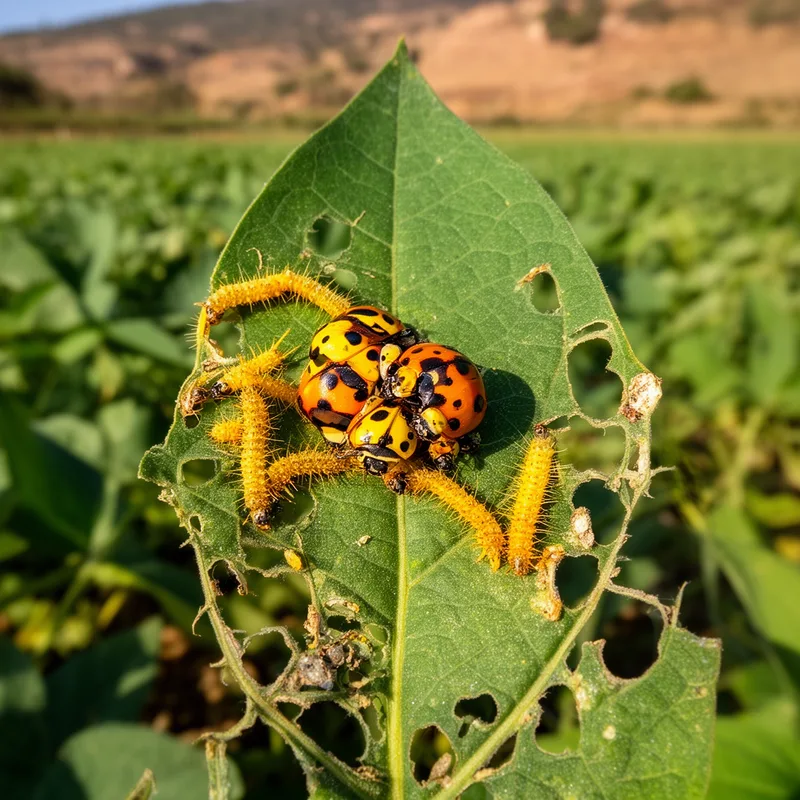
- Unlike most ladybugs, Epilachna species can cause harm to plants.
Examples
-
The farmer identified the insect as an Epilachna after noticing holes in the leaves.
-
Researchers studied the feeding habits of Epilachna to control crop damage.
-
Look at that bright Epilachna crawling on the flower!
-
The Epilachna species are known for their bright colors.
-
Researchers studied the feeding habits of Epilachna to control crop damage caused by these harmful insects.
-
The farmer identified the insect as an Epilachna after noticing the holes it made in the leaves of his plants.
-
Unlike most ladybugs, Epilachna species are known to feed on plants, causing potential harm to crops.
Surface Forms
Etymology
Epilachna likely comes from two Greek parts, epi- meaning 'on' and lachna meaning 'soft hair' or 'down'. So the name suggests a beetle that lives 'on' the hairy parts of plants or on leaves, which fits these ladybugs that eat plants.

