
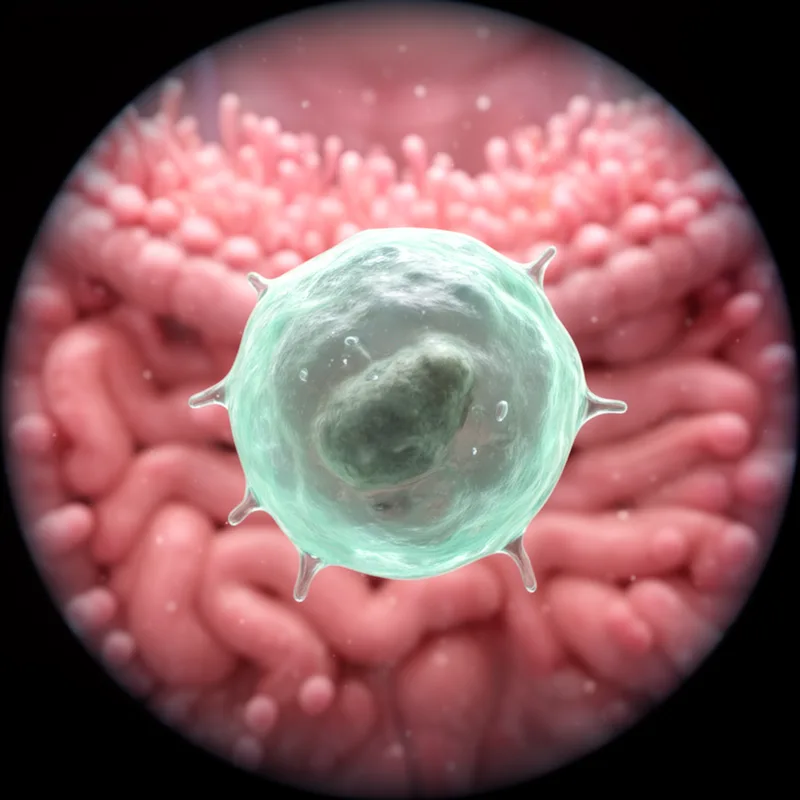
Endamoeba
- noun
- /ˌɛndəˈmiːbə/
- Specialized
- The genus Endamoeba includes several species found in the intestines of various animals.
Examples
-
Researchers studied the life cycle of Endamoeba under laboratory conditions.
-
Identification of Endamoeba is important in parasitology.
-
The Endamoeba genus includes several species.
-
Researchers are studying the Endamoebas found in contaminated water.
-
The genus Endamoeba includes several species that can cause intestinal infections in humans.
-
Researchers studied the life cycle of Endamoeba to understand its impact on human health.
-
Identification of Endamoeba in water samples is crucial for assessing contamination risks.
Compounds

- Specialized
A tiny parasite that lives in the human gut and causes severe diarrhea
Surface Forms
Morphology
Endamoeba = amoeba (transparent) = endo + amoeba
Formed by the productive scientific combining form 'endo-' (inside) + 'amoeba', so the meaning is directly derived for learners familiar with these elements.
Etymology
Endamoeba comes from two Greek parts: endo- meaning 'within' and amoeba meaning 'a single-celled creature'. So Endamoeba is an 'amoeba living inside', which fits that some species are found in the intestines of animals.

