

Emberiza citrinella
- noun
- Specialized
- The male Emberiza citrinella flaunts its striking yellow plumage during the breeding season.
Examples
-
In the early morning, the cheerful song of the Emberiza citrinella can often be heard in the fields.
-
The ornithologist spotted an Emberiza citrinella perched on the hedgerow.
-
During spring, male Emberiza citrinella are easily recognized by their vivid coloring.
-
Researchers studied the song patterns of Emberiza citrinella in various European habitats.
-
The Emberiza citrinella is often found in rural areas.
-
Did you see an Emberiza citrinella in the garden?
-
Birdwatchers are excited when they spot an Emberiza citrinella among the wildflowers.
Synonyms
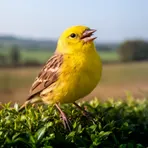
A small European bird whose male has bright yellow feathers
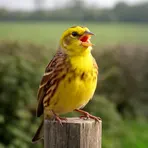
A small European songbird with males that have bright yellow feathers
Surface Forms
Morphology
Emberiza + citrinella
This is a Latin binomial species name; its meaning ('yellowhammer') is taxonomic rather than a compositional English phrase, and one constituent ('citrinella') is not a standard English word. Even if a learner knew 'Emberiza' as a bird genus, they would not reliably infer the specific species or its yellow plumage from the parts alone, so the meaning is not predictable to a B1 learner.
Etymology
Emberiza citrinella probably comes from old words that describe the bird and its color. The first part, Emberiza, may come from an old word for a 'small bunting' and citrinella comes from a Latin word meaning 'lemon-yellow', so the name points to the little yellow bird we call the yellowhammer.

