
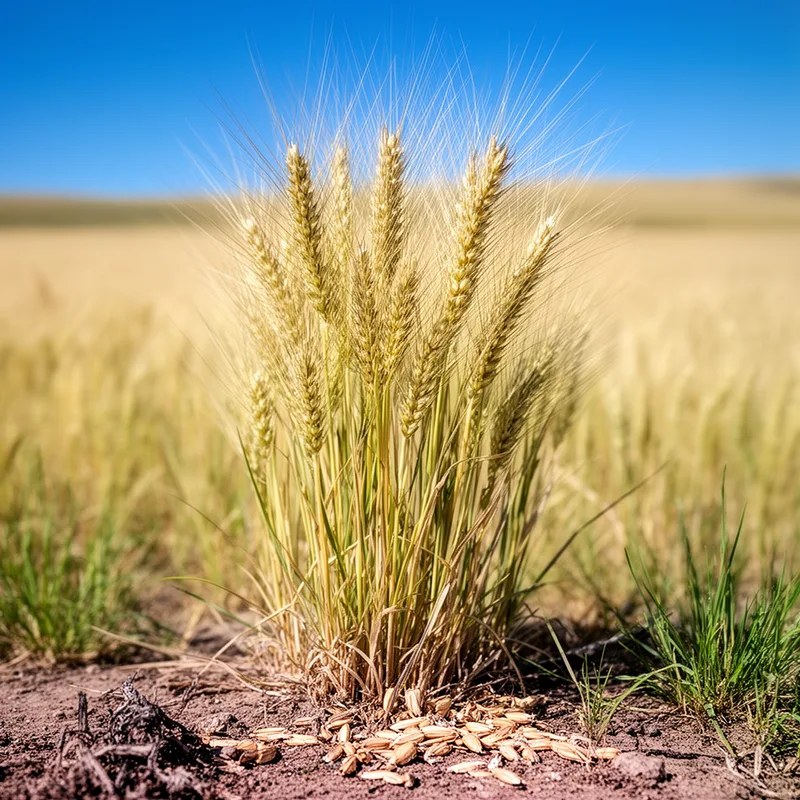
Elymus caput-medusae
- noun
- Specialized
- Ranchers often battle Elymus caput-medusae because it reduces the quality of forage for livestock.
Examples
-
The invasive Elymus caput-medusae can quickly take over pastures.
-
Scientists have studied the spread of Elymus caput-medusae in western grasslands.
-
Elymus caput-medusae can invade rangelands, making it difficult for native species to thrive.
-
Farmers often struggle with Elymus caput-medusae in their fields.
-
Elymus caput-medusae can invade rangelands, making it difficult for native species to thrive.
-
Ranchers often battle Elymus caput-medusae because it reduces the quality of forage for livestock.
-
The invasive Elymus caput-medusae can quickly take over pastures.
Synonyms

A wild grass with long, stiff bristles that look like snake hair
Surface Forms
Morphology
Elymus + caput-medusae
The binomial pairs the genus Elymus (a grass) with the Latin compound caput-medusae literally meaning 'Medusa head', so a learner who knows the constituents could infer a grass with a head resembling Medusa's bristling hair. However, because this relies on Latin taxonomic conventions and a mythological metaphor rather than ordinary English composition, the exact botanical sense (an invasive rye with long, bristling awns) is not fully predictable to a B1 learner.
Etymology
Elymus caput-medusae gets its name from Latin: caput means 'head' and medusae refers to 'Medusa'. The plant's seed head has many long, snake-like bristles that look like Medusa's hair, so the name points to its bristly look and helps you remember it is a weedy rye grass with long bristles.

