
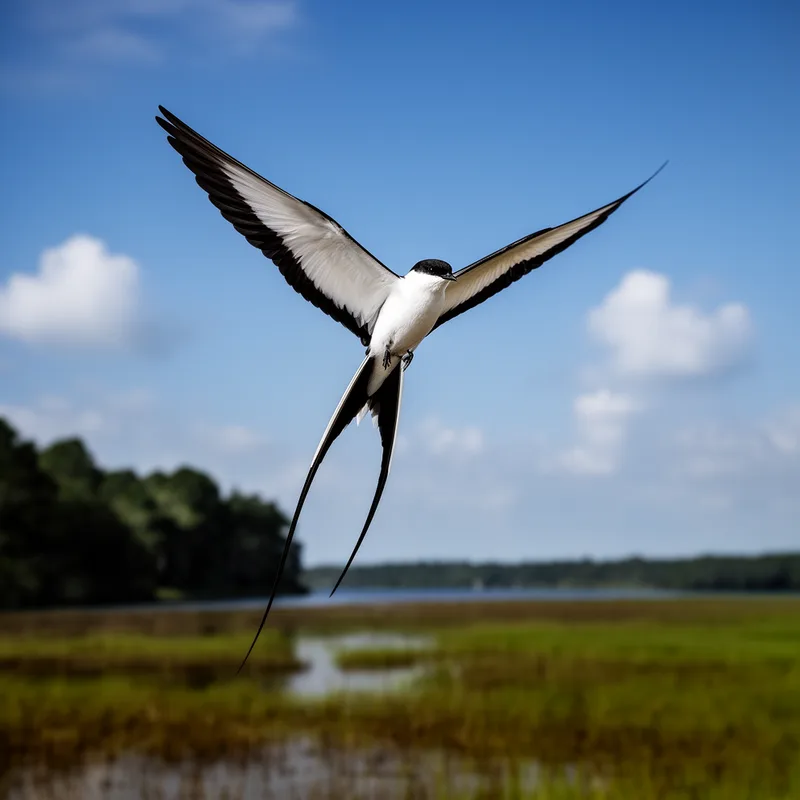
Elanoides forficatus
- noun
- Specialized
- The deeply forked tail helps the Elanoides forficatus maneuver swiftly while hunting insects in flight.
Examples
-
The Elanoides forficatus soars effortlessly over the southern wetlands each spring.
-
The Elanoides forficatus soars gracefully over the wetlands, showcasing its beautiful black-and-white plumage.
-
Many birdwatchers travel to Florida to observe the distinctive flight of the Elanoides forficatus.
-
The Elanoides forficatus is known for its striking appearance.
-
Have you ever seen an Elanoides forficatus in flight?
-
Many birdwatchers travel to Florida to observe the distinctive flight of the Elanoides forficatus.
-
The deeply forked tail of the Elanoides forficatus allows it to glide and maneuver expertly while hunting for insects in mid-air.
Synonyms

A bird of prey with a long forked tail and black and white feathers

A large North American hunting bird with black and white feathers and a deeply forked tail
Surface Forms
Morphology
Elanoides + forficatus
This is a Latin binomial (scientific name) functioning as a proper noun, not a compositional English phrase; the constituent items are taxonomic labels (one undefined in the provided data) and do not yield the common name 'swallow-tailed kite' by ordinary English composition. A B1 learner who "knows" the listed constituents would still not be able to derive the species meaning because the form and roots are specialized/Latinized and non-transparent in everyday English.
Etymology
The name Elanoides forficatus may come from Greek and Latin words that describe the bird's shape: Elanoides means 'kite-like' and forficatus means 'scissor-shaped' or 'forked', which gives a clear picture of its long, deeply forked tail. That's why the name fits the graceful 'swallow-tailed kite' we know today.

