
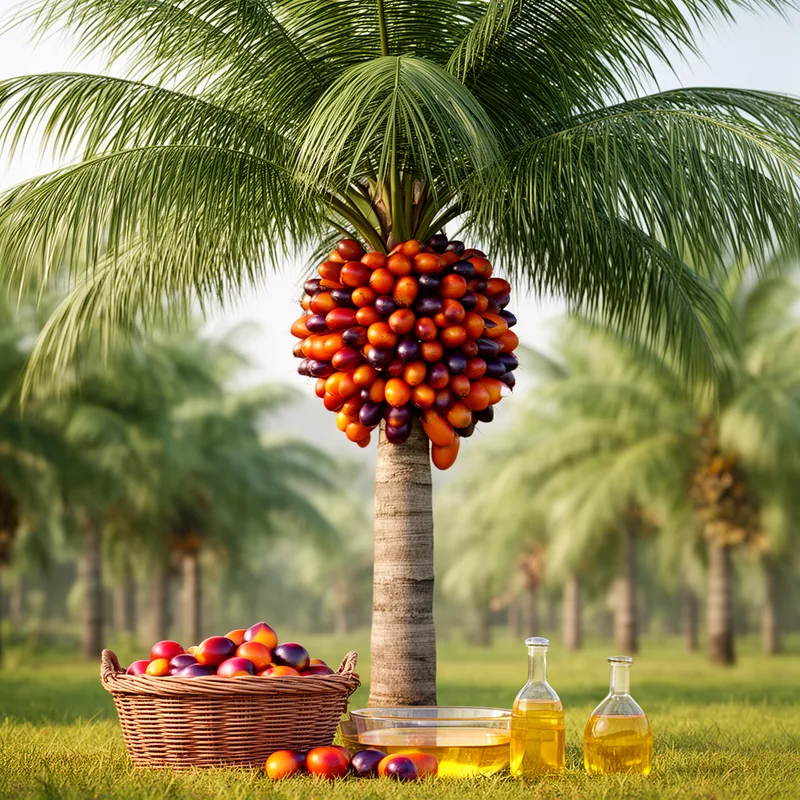
Elaeis oleifera
- noun
- Specialized
- The fruit of Elaeis oleifera is a source of edible oil in some regions of Central America.
Examples
-
Unlike the African oil palm, Elaeis oleifera is less widely cultivated but has unique properties valued by breeders.
-
Researchers are studying Elaeis oleifera to improve disease resistance in commercial oil palm hybrids.
-
The Elaeis oleifera is commonly found in tropical regions.
-
Many farmers cultivate Elaeis oleifera for its oil.
-
The fruit of Elaeis oleifera is a valuable source of edible oil for many communities in Central America.
-
Farmers in Brazil often choose Elaeis oleifera for its oil-rich fruit and resilience to local pests.
-
Researchers are exploring the benefits of Elaeis oleifera as an alternative oil palm species in sustainable farming.
Synonyms
 1
3.6
1
3.6

A tropical palm tree with long leaves that produces red fruit used to make oil

A palm tree native to Central and South America that produces oil from its fruit
Surface Forms
Morphology
Elaeis + oleifera
This is a Latin binomial where the name is compositional: 'Elaeis' denotes the oil-palm genus and 'oleifera' literally means 'oil-bearing' (from Latin roots). If a learner knows both constituents (i.e. the genus and that 'oleifera' = oil-bearing), the species meaning ('an Elaeis palm that bears oil-rich fruit') is directly derivable, so the expression is transparent.
Etymology
Elaeis oleifera comes from old Greek and Latin words: elaeis meaning 'olive' and oleifera meaning 'oil-bearing'. The name creates a simple picture — the palm's fruit is full of oil, so the name points to its oil-rich fruit.