
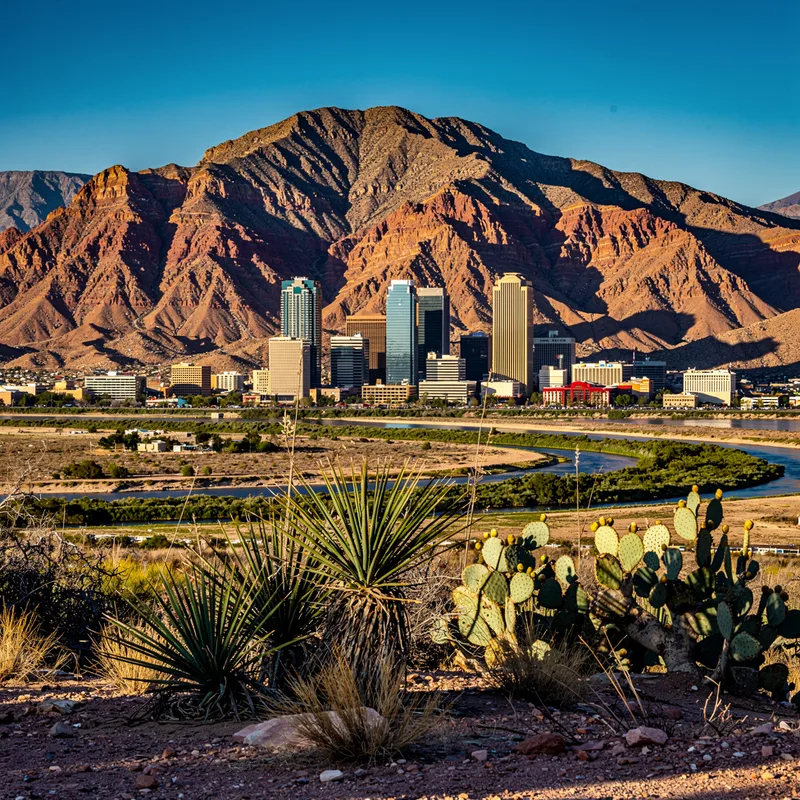
El Paso
 75
1.0

- proper noun
- /ɛl ˈpæsoʊ/
- I grew up in El Paso, which is located right by the Rio Grande.
- El Paso, Texas
- El Paso and Ciudad Juarez
- El Paso area
Loading YouTube…
Watch on YouTubeWhen you know the other is living in El Paso.
- When you know the other is living in El Paso.
- And don't forget this Saturday in Atlanta, Dallas and El Paso, we're at the Holiday Inn with doing fucking physical workshops.
- The most dangerous story I've ever reported was on Chihuahua state governor and all the houses he had in El Paso, TX from public money.
- And what we found was that there they were counting anyone who speaks English as a second language as be having a severe disability in El Paso, TX.
- Another another bump that I considered a bum fighter sign them we've I was going to do to my hometown of El Paso.
- Now, the city of El Paso claims it sent Trump multiple invoices since the event and even sent him a letter which read.
Examples
-
William Serrata is the president of El Paso Community College.
Academic text (2016) -
Within four hours of the report, Anna had been on a plane to El Paso.
Fiction book (1999) -
And now I find you in El Paso.
-
Once in El Paso, I had this bag of...
-
Well, actually, I was born in El Paso... but I live here now.
-
I know him from El Paso.
-
I took the job in El Paso as the paper's editor.
Fiction book (2000) -
So, every Friday, the flight from Dallas to El Paso was booked solid.
-
I drove 1,800 miles from El Paso, Texas, to be here.
-
He owns a horse ranch outside of El Paso.
Surface Forms
Morphology
El + Paso
El Paso is a Spanish place name whose parts literally mean 'the pass' (el = 'the', paso = 'pass/step'), so a learner who knows those constituent meanings could infer it refers to a geographic feature or place. However, the specific referent — a city in western Texas on the Rio Grande — cannot be fully derived from the literal parts, making the relation only partially transparent.
Etymology
El Paso comes from the Spanish words El and Paso, meaning 'the pass'. Long ago, people used a natural way through the hills and across the river at that spot, so the place was called 'the pass' and the name stayed for the city.