
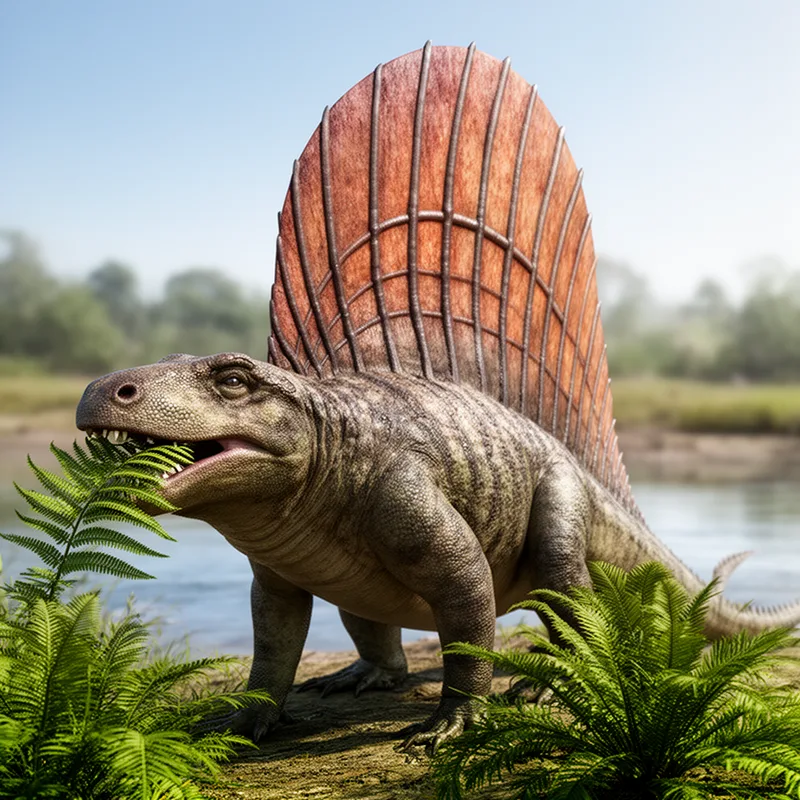
Edaphosaurus
- proper noun
- /ˌɛdəfəˈsɔrəs/
- Specialized
- Researchers believe that the sail of Edaphosaurus played a role in regulating body temperature.
Examples
-
Unlike Dimetrodon, Edaphosaurus had small, herbivorous teeth and a distinctive crossbarred sail.
-
The fossilized remains of Edaphosaurus have been found in North America and Europe.
-
The Edaphosaurus roamed the Earth over 300 million years ago.
-
Did you know that the Edaphosaurus had a sail on its back?
-
Fossil evidence suggests that Edaphosaurus was one of the largest reptiles of its time.
-
Paleontologists have studied Edaphosaurus to understand its unique adaptations during the Permian period.
-
The unusual sail of Edaphosaurus is thought to have helped it attract mates.
Surface Forms
Etymology
The word Edaphosaurus comes from Greek words edaphos meaning 'ground' and -saurus meaning 'lizard', and the -saurus part is the same as in dinosaur. So, the name means 'ground lizard', which fits the big, early reptile with a sail on its back.

