

Eburophyton austinae
- noun
- Specialized
- Unlike many plants, Eburophyton austinae lacks green leaves and relies on fungi for nutrients.
Examples
-
The rare Eburophyton austinae thrives in the shaded forests of northern California.
-
Researchers documented a new population of Eburophyton austinae during their field study.
-
The Eburophyton austinae thrives in arid conditions.
-
Is the Eburophyton austinae native to Idaho?
-
Researchers documented a new population of Eburophyton austinae during their field study.
-
The rare Eburophyton austinae thrives in the shaded forests of northern California.
-
Unlike many plants, Eburophyton austinae lacks green leaves and relies on fungi for nutrients.
Synonyms
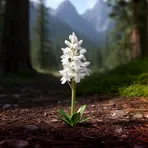
A small plant with white waxy flowers and few leaves that grows in western US mountains

A pale white plant with almost no leaves that gets food from fungi in shaded forests
Surface Forms
Morphology
Eburophyton + austinae
This is a taxonomic Latin binomial (genus + species) whose parts are not English words and are marked as not found in the dictionary. The label functions as an arbitrary scientific name rather than a compositional English phrase, so a B1 learner who knows the constituent labels would not be able to derive the plant description from them. Even where classical roots (e.g., -phyton = plant) exist, recognizing those requires specialist knowledge beyond B1, making the expression effectively opaque to ordinary learners.
Etymology
Eburophyton austinae comes from old words meaning 'ivory' and 'plant', and the species name austinae honors a person named Austin. The parts Eburo- meaning 'ivory' and -phyton meaning 'plant' make a simple picture of a pale, waxy plant, so the name fits this nearly leafless species.

