
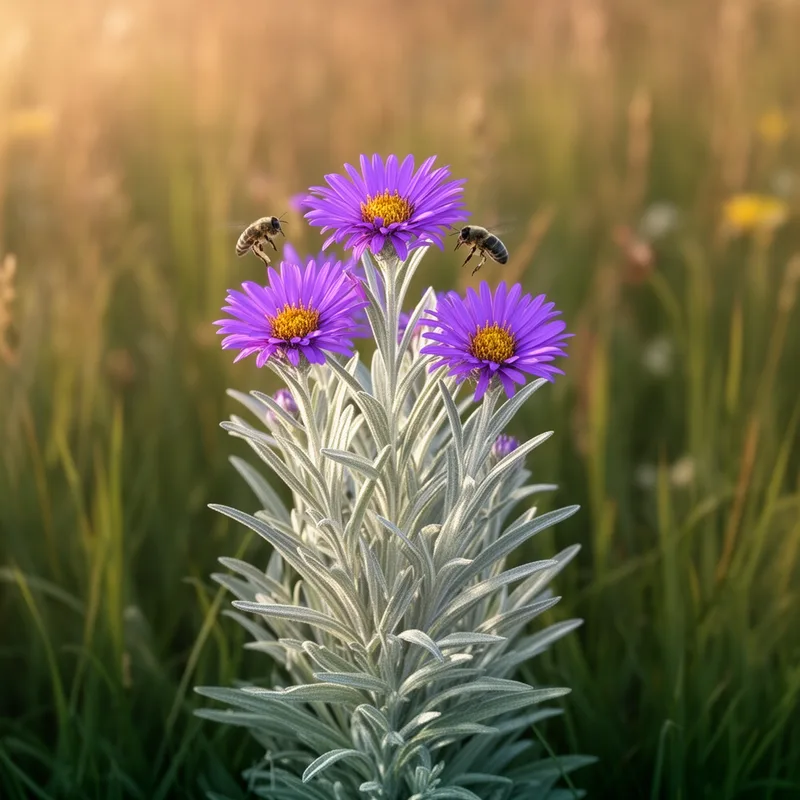
Eastern silvery aster
- noun
- Specialized
- The Eastern silvery aster is valued by gardeners for its showy purple blossoms in late summer.
Examples
-
Pollinators such as bees are attracted to the Eastern silvery aster when it blooms.
-
Conservationists are working to protect the habitat of the rare Eastern silvery aster.
-
Look at that beautiful Eastern silvery aster!
-
The Eastern silvery aster blooms in late summer.
-
Conservationists are working to protect the habitat of the rare Eastern silvery aster.
-
Pollinators such as bees are attracted to the Eastern silvery aster when it blooms.
-
The Eastern silvery aster is valued by gardeners for its showy purple blossoms in late summer.
Surface Forms
Morphology
The phrase is fully compositional: 'eastern' indicates geographic origin/region, 'silvery' describes the colour/appearance, and 'aster' names the flower, so together they denote a silvery-coloured aster from the east. This follows ordinary adjective + noun composition found across languages, so a B1 learner who knows the constituents will readily infer the meaning.
Etymology
Eastern silvery aster gets its name from where it grows and how it looks. The word aster comes from an old word meaning 'star' because the purple flower looks like a small star, silvery describes its pale narrow leaves, and Eastern shows it is found in the east, so the name tells you about the plant's place and appearance.

