
Easter lily vine
- noun
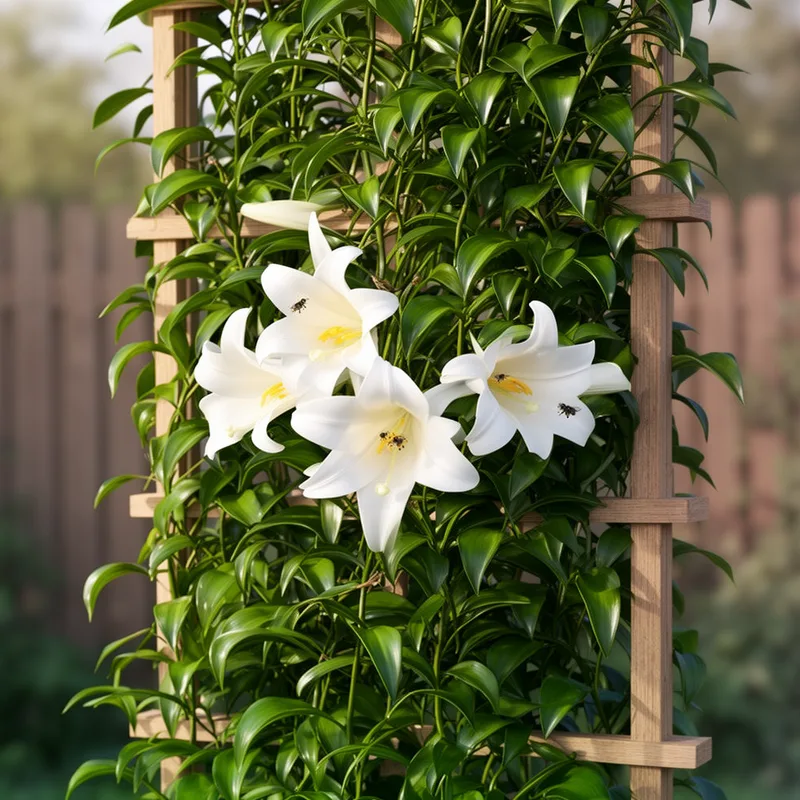
- The Easter lily vine climbed the trellis, filling the garden with its fragrant white flowers.
Examples
-
She planted an Easter lily vine next to the fence for its beautiful, glossy leaves and trumpet blooms.
-
In spring, the Easter lily vine attracts bees with its abundant, sweet-scented blossoms.
-
The Easter lily vine blooms beautifully in spring.
-
I love the fragrance of the Easter lily vine.
-
In spring, the Easter lily vine attracts bees with its abundant, sweet-scented blossoms.
-
She planted an Easter lily vine next to the fence for its beautiful, glossy leaves and trumpet blooms.
-
The Easter lily vine climbed the trellis, filling the garden with its fragrant white flowers.
Synonyms

A climbing plant that has shiny green leaves and clusters of white fragrant flowers shaped like trumpets

A climbing evergreen plant with large shiny leaves and sweet white trumpet flowers
Surface Forms
Morphology
The phrase denotes a vine (a climbing plant) that is associated with or bears lily-like flowers related to Easter; this meaning is directly and compositionally derivable from the constituents 'Easter' + 'lily' + 'vine'. It follows standard English attributive noun compounding and is cross-linguistically transparent, so a B1 learner who knows the individual words should be able to infer the meaning.
Etymology
Easter lily vine gets its name from its white, trumpet-shaped flowers that look like Easter lilies and often open in spring around Easter. The word vine shows it climbs, so the name means 'a climbing plant with white, lily-like blooms' and explains the plant's look and season.

