
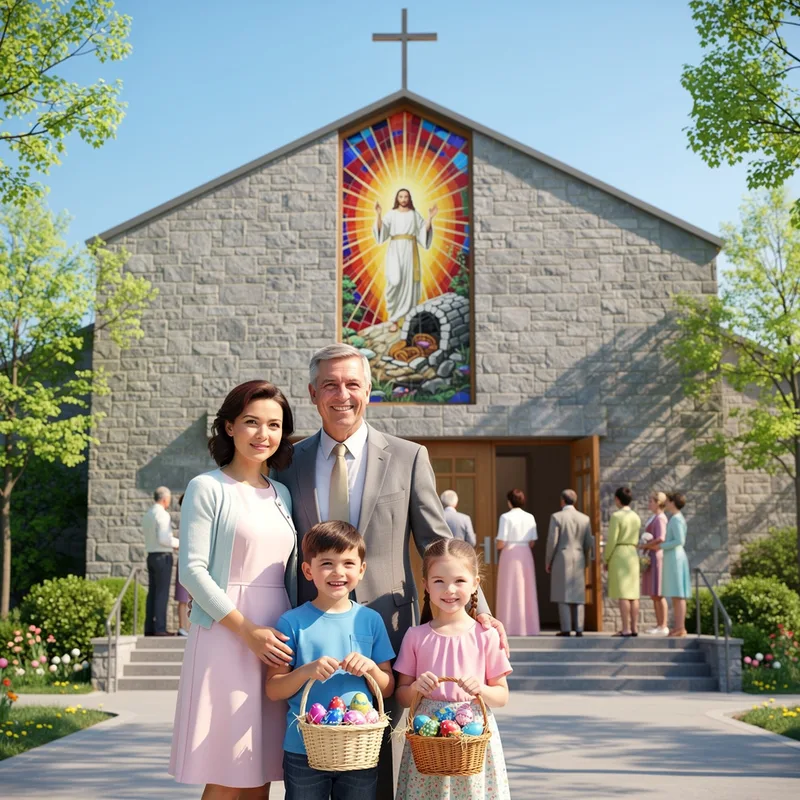
Easter Day
 1
1.0
1
1.0

- noun
- /ˈiːstər deɪ/
- On Easter Day, Christians celebrate the resurrection of Jesus with joyful services.
Examples
-
Calendrically, it is commemorated through Good Friday and Easter Day.
Academic text (2013) -
We have sinned, but on this Easter Day... ...when Christ rose from the dead, may one knight here... ...through victory in arms find the grace... ...to draw the sword and be king.
-
I remember an Easter day when you took us to the top of the hill.
Fiction book (1997) -
There were so many today, on this Easter day.
Fiction book (1998) -
If you could see us now this Easter day at Black Cove, you would know every step of your journey was worth it.
-
But where has your Holiness read that the dead should not be buried on Easter Day?
Academic text (1997) -
That sounds dandy, but it doesn't replace a father and a husband on Easter Day.
Fiction book (1991) -
Our first animal was memorable, a young female christened Paskalina by our assistants for Easter Day of her capture.
Academic text (1992) -
Tacky's Revolt in St. Mary's parish in Jamaica began in the evening on Easter day in 1760, with a further outbreak in Westmoreland on Whitsunday.
Academic text (2007) -
Families often gather for a special meal together on Easter Day.
Synonyms
 15
1.0
15
1.0
The Sunday when Christians celebrate Jesus rising from the dead
 7
1.0
7
1.0
A Christian holiday celebrating Jesus coming back to life
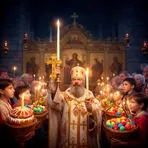
The Christian festival of Easter celebrated especially in Eastern churches
Surface Forms
Morphology
The phrase combines 'Easter' (the Christian holiday) with 'day' (a calendar day), so its meaning — the day on which Easter is celebrated — is directly derivable from the constituents. This compositional, culture-specific label is cross-linguistically common and would be understandable to a B1 learner who knows both words.
Etymology
Easter Day is the Christian day for celebrating when Jesus rose from the dead, called the 'resurrection'. Long ago people used spring signs like eggs and flowers to show 'new life', and that image explains why Easter Day is a spring festival of 'new life' and celebration.