

Dutch florin
- noun
- Before the euro, the Dutch florin was used in shops across the Netherlands.
Examples
-
In 1998, prices in Amsterdam were still listed in Dutch florins rather than euros.
-
Collectors often seek rare coins such as the Dutch florin for their historical value.
-
I exchanged my dollars for Dutch florins.
-
The Dutch florin was replaced by the euro in 2002.
-
Before the euro, the Dutch florin was the main currency used in shops across the Netherlands.
-
In the 1990s, the Dutch florin was the currency that people used to buy goods and services in the Netherlands.
-
In 1998, prices in Amsterdam were still listed in Dutch florins, which were used until the euro was adopted.
Synonyms
 3
9.7
3
9.7

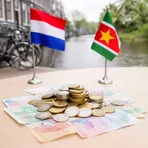
A kind of money used in the past in the Netherlands and Suriname
 2
9.9
2
9.9
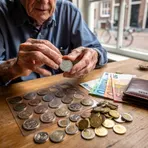
Former Dutch money worth 100 cents, replaced by the euro in 2002
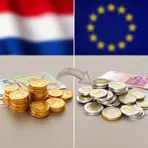
Former main money unit in the Netherlands equal to 100 cents, replaced by the euro in 2002

Money used in the Netherlands before the euro
Surface Forms
Morphology
The meaning 'the former basic unit of currency in the Netherlands' is directly derivable from combining 'Dutch' (pertaining to the Netherlands) with 'florin' (a type of currency); it is a straightforward adjective + noun composition. This is a common, cross-linguistic pattern and would be immediately understandable to a B1 learner who knows both constituents.
Etymology
The noun Dutch florin comes from an old coin called the florin, first made in Florence and showing a small flower on it. That's why people used the name for the Netherlands' money, so the 'Dutch florin' was the country's currency before the 'euro'.