
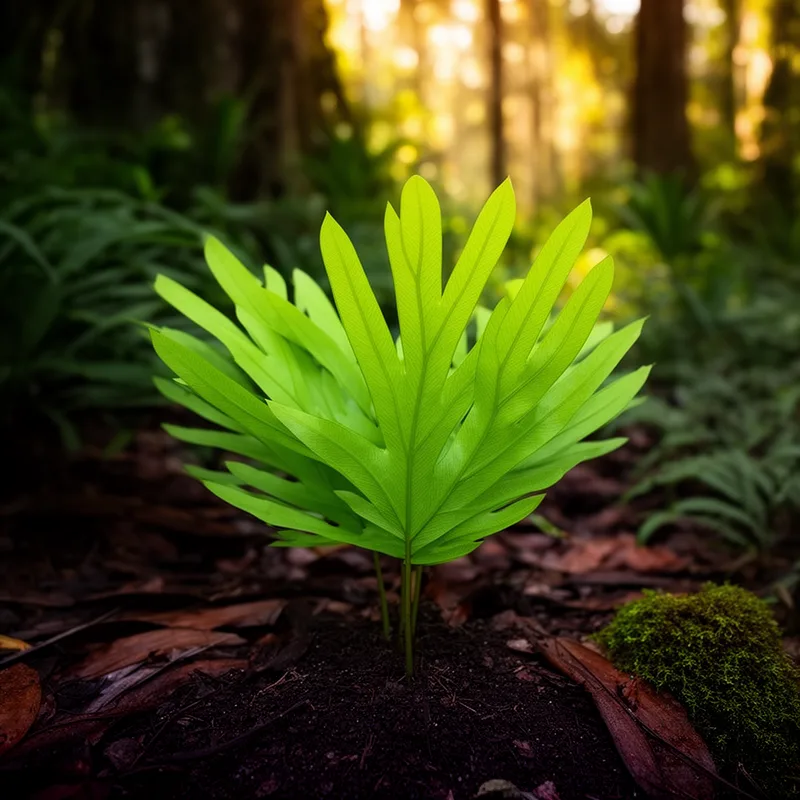
Doryopteris pedata
- noun
- Specialized
- Gardeners appreciate Doryopteris pedata for its distinctive, palmate leaves and tropical appearance.
Examples
-
Botanists studied the unique frond structure of Doryopteris pedata during their field expedition.
-
The lush undergrowth in the rainforest included several specimens of Doryopteris pedata.
-
Look at the Doryopteris pedata.
-
The Doryopteris pedata is known for its unique leaf structure.
-
Gardeners appreciate Doryopteris pedata for its distinctive, palmate leaves and tropical appearance.
-
Botanists studied the unique frond structure of Doryopteris pedata during their field expedition.
-
The lush undergrowth in the rainforest included several specimens of Doryopteris pedata.
Synonyms


 1
9.5
A fern from tropical America with leaves shaped like a hand
Surface Forms
Morphology
Doryopteris + pedata
This is a Latin binomial: knowing 'Doryopteris' (a genus of ferns) lets a learner infer it names a species of that genus, but the specific epithet 'pedata' is lexicalized/Latin and not transparent in ordinary English so the detailed sense (deeply lobed, palmate fronds) is not derivable. Taxonomic naming is cross-linguistically recognizable so learners can guess 'a species of Doryopteris' but not the descriptive morphology, making the expression partially but not fully transparent.
Etymology
Doryopteris pedata may come from old Greek and Latin words: dory ('spear'), pteris ('fern') and pedata ('footed'). The name creates a picture — the fern's leaves are deeply cut and spread like a hand or foot with 'toes', so the name fits this tropical fern with hand-like, lobed fronds.