

Doppler radar
 4
3.9
4
3.9

- noun
- /ˈdɑːplər ˈreɪdɑr/
- Specialized
- Meteorologists used the Doppler radar to track changes in wind velocity during the severe weather event.
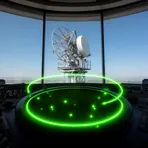
- Doppler radar system
Examples
-
Doppler radar indicates the storm is capable of producing large hail, breaking windows, and damaging houses.
-
On Doppler radar, we see a rapidly developing front along the Jersey coastline.
-
First-alert doppler radar shows that this is a very intense storm.
-
Recently, mobile Doppler radar units, remote Internet uplinks, and advanced global positioning systems have been introduced into storm-interception research.
Academic text (1999) -
While weather specialists use the National Weather Service's Doppler radar system (NEXRAD) to detect precipitation, Westbrook uses it primarily to detect moth migration.
Academic text (1999) -
The Doppler radar revealed the location and speed of the approaching storm, allowing residents to prepare.
-
The local news station displayed images from the Doppler radar, showing heavy rainfall in our area.
Synonyms
 367
4.1
367
4.1
A machine that uses radio waves to find objects and show their distance and speed
How Accurate

Surface Forms
Morphology
The compound is directly compositional: 'Doppler' (the change in wave frequency with motion) combined with 'radar' (a radio-based detection system) clearly yields a radar that uses the Doppler effect to measure velocity. This follows a standard noun–noun compounding pattern and is cross-linguistically obvious, so a B1 learner who knows both constituents would be able to infer the MWE's meaning.
Etymology
Doppler radar is named after the scientist Doppler, who showed that a sound's pitch changes when the source moves, like an ambulance siren that gets higher and then lower as it passes. So Doppler radar sends radio waves and watches that change to tell the 'speed' and 'direction' of moving rain or wind, which is why it can spot storms.