
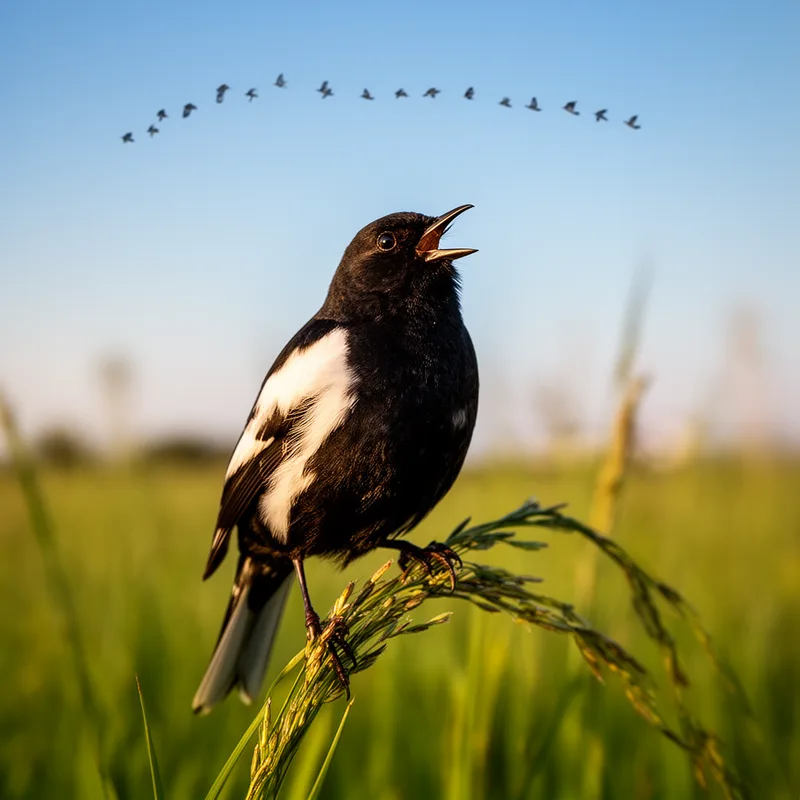
Dolichonyx oryzivorus
- noun
- /ˌdoʊlɪˈkɒnɪks ɔːˌraɪzɪˈvɔːrəs/
- Specialized
- The Dolichonyx oryzivorus can be spotted in North American meadows during the breeding season.
Examples
-
The Dolichonyx oryzivorus is renowned for its striking black-and-yellow plumage during the breeding season in meadows.
-
Ornithologists study the migration patterns of Dolichonyx oryzivorus as it travels from North to South America.
-
Farmers sometimes notice flocks of Dolichonyx oryzivorus feeding in rice fields during their migration.
-
The Dolichonyx oryzivorus is often seen in tall grasslands.
-
Have you ever heard the song of the Dolichonyx oryzivorus?
-
During spring migration, flocks of Dolichonyx oryzivorus gather in fields, delighting birdwatchers with their beautiful melodies.
-
Ornithologists have observed that Dolichonyx oryzivorus primarily migrates between North and South America, often stopping in wetlands.
Synonyms
 1
9.9
1
9.9

A small North American songbird that moves south in winter and sings a bubbly song
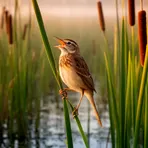
A North American songbird that lives in marshes and reed beds
Surface Forms
Morphology
Dolichonyx + oryzivorus
This is a Linnaean binomial (genus + species) in Latin; its meaning as the bobolink is a proper-name label and cannot be deduced by an average B1 learner from the constituents, especially since 'oryzivorus' is a Latin-form element not found in general vocabulary. Scientific names are lexicalized labels rather than compositional phrases in everyday English, so the sense is not transparently recoverable from the parts.
Etymology
Dolichonyx oryzivorus comes from old Greek and Latin words: Dolichonyx means 'long' and 'claw' and oryzivorus means 'rice-eater'. So the name gives a simple picture of a long-clawed bird that eats in rice fields during migration, which helps you remember this migratory songbird.