
Docetism
- noun
- /ˈdoʊsɪˌtɪzəm/
- Formal
- Early church leaders condemned Docetism as it undermined the belief in Jesus' real humanity and suffering.
Examples
-
Preexistence is incredible today; the humanity of Jesus must at all costs be preserved and docetism avoided; such considerations can, and in this case do, carry enough weight to tip the scales on the side of giving the Philippians hymn an interpretation consistent.
Academic text (1991) -
The film's detractors are themselves heretics, he wittily demonstrated; they have fallen into Docetism, the third-century error of taking Jesus as wholly divine.
Academic text (1991) -
The one heresy that must be abjured, come what may, is what Macquarrie calls docetism, using the word in a rather broad sense that takes in every tendency to see Jesus as more or other than altogether human.
Academic text (1991) -
Anything like an "infinitely qualitative difference" between God and the universe is as much a bete noire for Macquarrie as docetism is.
Academic text (1991) -
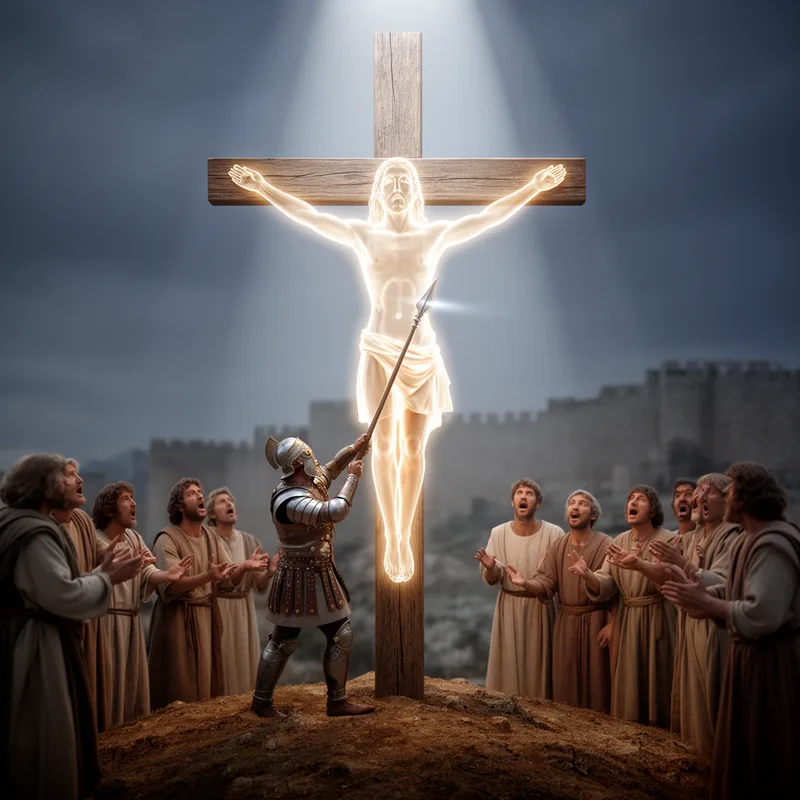
Docetism teaches that Docetism implies Jesus only seemed to suffer on the cross, without having a true human body.
-
Many Gnostic groups promoted Docetism, arguing that Jesus' physical existence was merely an illusion.
Surface Forms
Morphology
Docetism = docetic (opaque) = docet + ism
The term is formed from the Greek combining form 'docet-' (meaning 'to seem') plus the suffix '-ism', a formation that is specialized and not transparent to average learners.
Etymology
Docetism comes from the Greek root dokein meaning 'to seem' and the ending -ism meaning 'a belief'. That's why Docetism is the belief that Jesus only 'seemed' to have a real human body rather than truly having one.

