
Divina Commedia
- proper noun
- /dɪˈviːnə kɒmˈmɛdiə/
- Literature
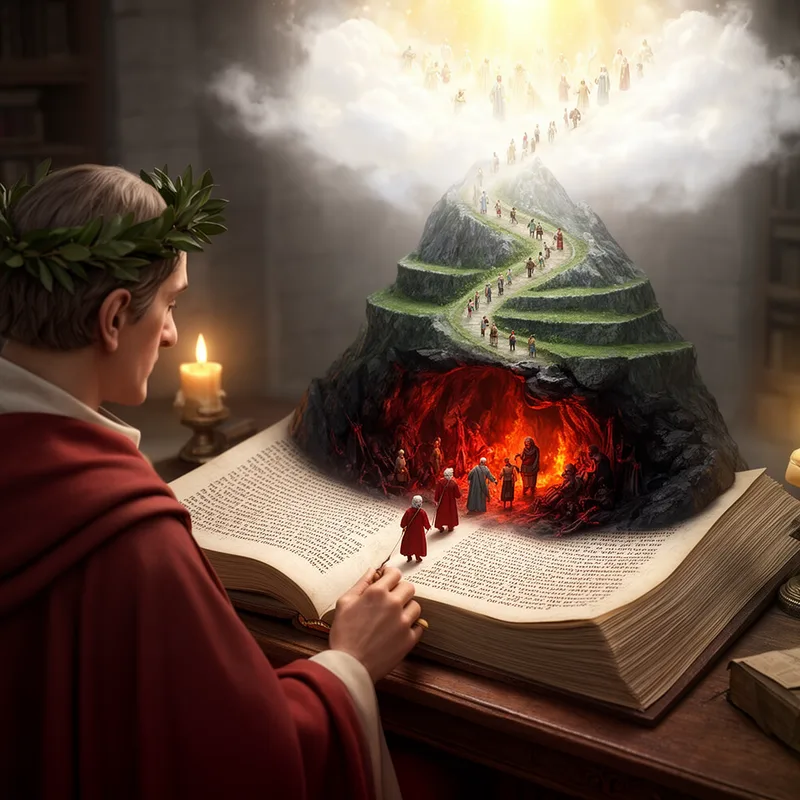
- The Divina Commedia is divided into three parts: Inferno, Purgatorio, and Paradiso.
Examples
-
Dante Alighieri wrote the Divina Commedia in the early 14th century.
-
The Divina Commedia is often studied for its allegorical depiction of the afterlife.
-
Dante's Divina Commedia has influenced countless writers and artists over the centuries.
-
Many scholars analyze the structure and symbolism found in the Divina Commedia.
-
Dante's Divina Commedia has influenced countless writers and artists over the centuries.
-
Many scholars analyze the structure and symbolism found in the Divina Commedia.
-
The Divina Commedia is often studied for its allegorical depiction of the afterlife.
Synonyms

 2
8.4
2
8.4

A long poem by Dante Alighieri about a soul's journey through Hell, Purgatory, and Paradise
Surface Forms
Morphology
Divina + Commedia
The phrase is literally the Italian words for 'divine' + 'comedy', so a learner who knows those constituents can infer a literal meaning like 'divine comedy'. However, as a proper title referring to Dante's specific epic poem (its structure, authorship, and cultural content), that full referential meaning is not predictable from the parts alone and requires world‑literature knowledge.
Etymology
Divina Commedia gets its name from two parts: Commedia, which in Dante's time meant a story that begins in trouble and ends happily, and Divina, a later addition meaning 'divine' or 'sacred' used by the writer Boccaccio. Because the poem follows a journey from Hell to Paradise, the title creates the image of a sacred journey with a hopeful ending.