

Dipodidae
- noun
- /ˌdaɪpəˈdɪdi/
- Specialized
- The Dipodidae family includes several species of jerboas.
Examples
-
Unlike other rodents, members of Dipodidae have highly specialized adaptations for jumping in arid environments.
-
The Dipodidae are known for their long hind legs, which help them leap great distances.
-
Researchers studying desert habitats often encounter various species belonging to the family Dipodidae.
-
Did you know that Dipodidae are found in deserts?
-
Researchers studying desert habitats often encounter various species belonging to the family Dipodidae.
-
The Dipodidae are known for their long hind legs, which help them leap great distances.
-
Unlike other rodents, members of Dipodidae have highly specialized adaptations for jumping in arid environments.
Synonyms
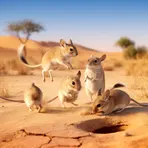
A group of small, long-legged rodents like jerboas that live in dry parts of Asia and Africa
Compounds
- Specialized
A group of small, long-legged rodents like jerboas that live in dry parts of Asia and Africa
Surface Forms
Morphology
Dipodidae = dipod + idae
This is a scientific taxonomic name formed from a Greek combining form and the zoological family suffix '-idae'; the components are not standalone English words and the meaning is not derivable by an average B1 learner.
Etymology
Dipodidae comes from Greek parts di- meaning 'two', pod meaning 'foot', and -idae meaning 'family'. Think of a tripod which means 'three feet' to see the idea: Dipodidae are the 'two-foot family', named for their two large back feet that help them jump.

