
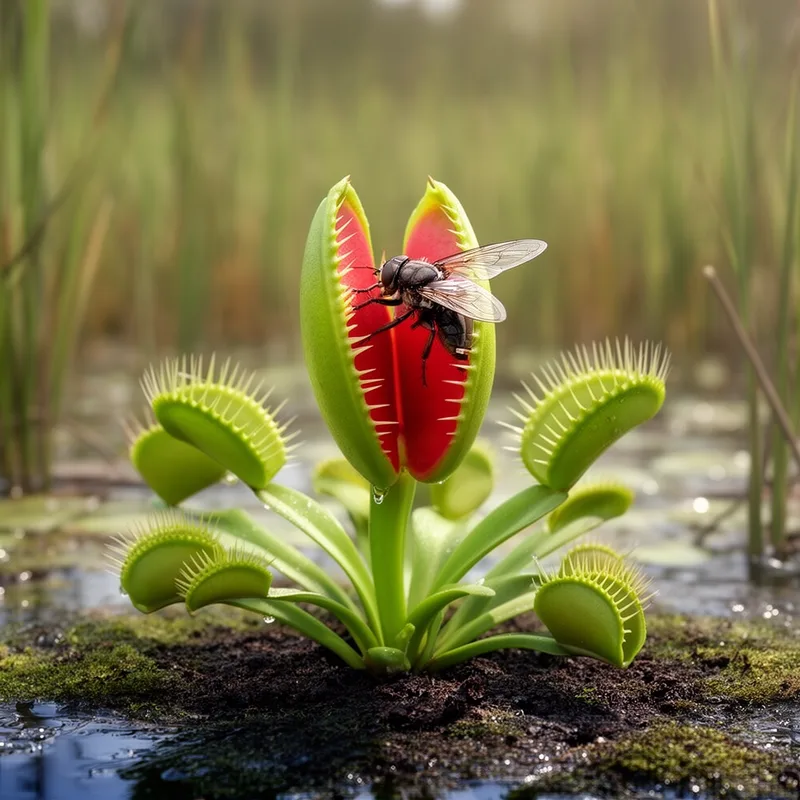
Dionaea muscipula
- noun
- /daɪˈoʊniə mʌˈskɪpjʊlə/
- Specialized
- The Dionaea muscipula is famous for its rapid leaf movement to catch unsuspecting insects.
Examples
-
The natural habitat of Dionaea muscipula is restricted to the wetlands of the Carolinas.
-
Many plant enthusiasts cultivate Dionaea muscipula for its unique method of capturing prey.
-
The Dionaea muscipula is a fascinating plant.
-
Many gardeners love the Dionaea muscipula for its unique appearance.
-
Many plant enthusiasts cultivate Dionaea muscipula for its unique method of capturing prey.
-
The Dionaea muscipula is famous for its rapid leaf movement to catch unsuspecting insects.
-
The natural habitat of Dionaea muscipula is restricted to the wetlands of the Carolinas.
Synonyms
 4
4.1
4
4.1

A plant that catches and digests insects for food
 1
4.6
1
4.6
A plant that eats insects and small animals to get food

A small plant that eats insects by snapping its leaves shut quickly
Surface Forms
Morphology
Dionaea + muscipula
This is a Latin scientific binomial functioning as a taxonomic proper name rather than a compositional English phrase; its meaning (the Venus flytrap) is a learned label, not predictable from ordinary-English constituents. The second element 'muscipula' has no dictionary gloss here, and scientific names generally remain opaque to B1 learners even if they recognize one element, so the species name would not be derivable from its parts.
Etymology
Dionaea muscipula may come from two old words: Dionaea from the Greek goddess Dione, linked to 'Venus', and muscipula from Latin meaning 'fly-catcher'. So the name matches the common name 'Venus flytrap' and describes the plant's leaves that snap shut to catch flies.