
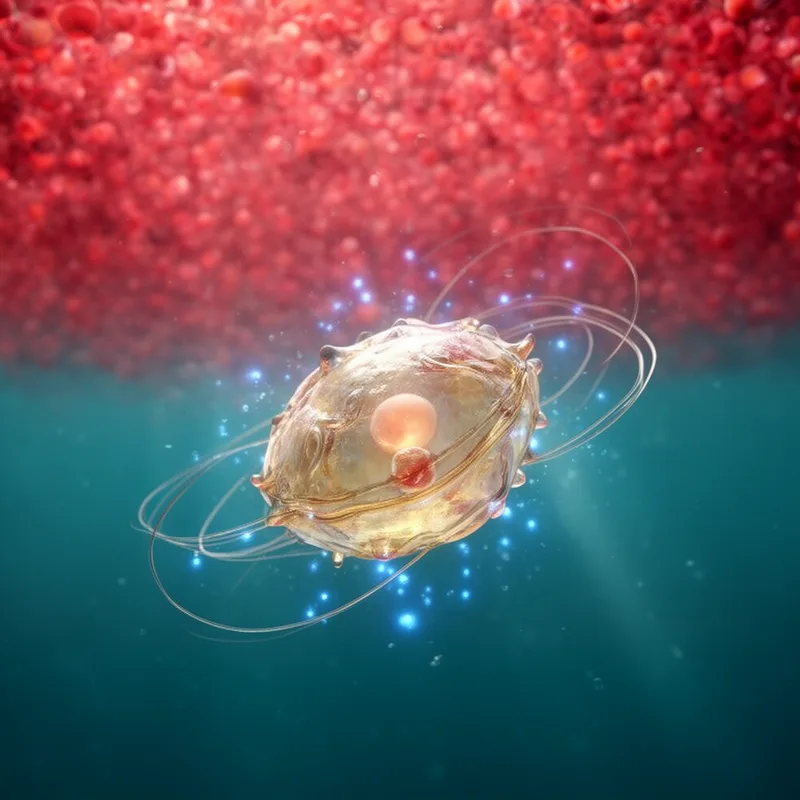
Dinoflagellata
- noun
- /ˌdaɪnəˈflædʒəˌlɑːtə/
- Specialized
- Scientists study Dinoflagellata to understand their role in ocean ecosystems.
Examples
-
The bioluminescence seen in certain coastal waters is often caused by Dinoflagellata.
-
The Dinoflagellata are fascinating organisms found in marine environments.
-
Some species within the Dinoflagellata can form harmful algal blooms known as red tides.
-
Many Dinoflagellates can produce toxins harmful to marine life.
-
Scientists studied various species of Dinoflagellata to understand their role in marine ecosystems.
-
During the summer months, blooms of Dinoflagellata can lead to harmful red tides in coastal waters.
-
Researchers found that some Dinoflagellata species are bioluminescent, creating beautiful glowing patterns in the water.
Synonyms

A group of single-celled algae with two tail-like parts that sometimes glow and cause red tides
Surface Forms
Morphology
Dinoflagellata = dinoflagellate (semi-transparent) = dino + flagell + ata
The plural form follows Latin scientific inflection; learners who know 'dinoflagellate' will recognize the relation, but the '-ata' plural is not productive English morphology for most learners.
Etymology
Dinoflagellata comes from the parts dino- and flagellata, where dino- comes from a Greek word for 'spin' and flagellata is from Latin flagellum meaning 'little whip' or 'tail'. So the name helps you remember that these tiny single cells in the sea often move by spinning with whip-like tails, which is why some can make harmful 'red tides'.

