

Digitaria sanguinalis
- noun
- Specialized
 :
Digitaria sanguinalis
:
Digitaria sanguinalis
- Although Digitaria sanguinalis is used as forage in some areas, it is mostly treated as a weed in North America.
Examples
-
Farmers often try to control the spread of Digitaria sanguinalis to protect their crops.
-
Digitaria sanguinalis is commonly found invading lawns and gardens in temperate regions.
-
Farmers often struggle with Digitaria sanguinalis in their fields.
-
Have you seen how Digitaria sanguinalis spreads quickly?
-
Digitaria sanguinalis is often considered a nuisance in gardens due to its aggressive growth.
-
Controlling Digitaria sanguinalis can be challenging for farmers who want to maintain healthy crops.
-
Many people find Digitaria sanguinalis sprouting unexpectedly in their lawns and flower beds.
Synonyms
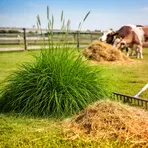
A grass used for hay that grows fast and often becomes a weed
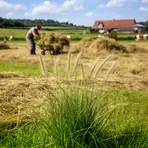
A grass from Europe grown for hay and often a weed in fields
Surface Forms
Morphology
Digitaria + sanguinalis
This is a scientific Latin binomial: 'Digitaria' is a taxonomic genus name (a proper noun) and 'sanguinalis' is not an ordinary English word (not found in the dictionary). The label is a conventional species name rather than a compositional English phrase, so a B1 learner who knows the constituent tokens would not be able to derive that it refers to a grass species and thus the expression is opaque.
Etymology
Digitaria sanguinalis may come from two Latin words: Digitaria from 'finger' because the plant's seed heads spread out like fingers, and sanguinalis from 'blood' because parts of the plant can have a red color. So the name paints a simple picture of this common grass often seen as a 'weed'.

