
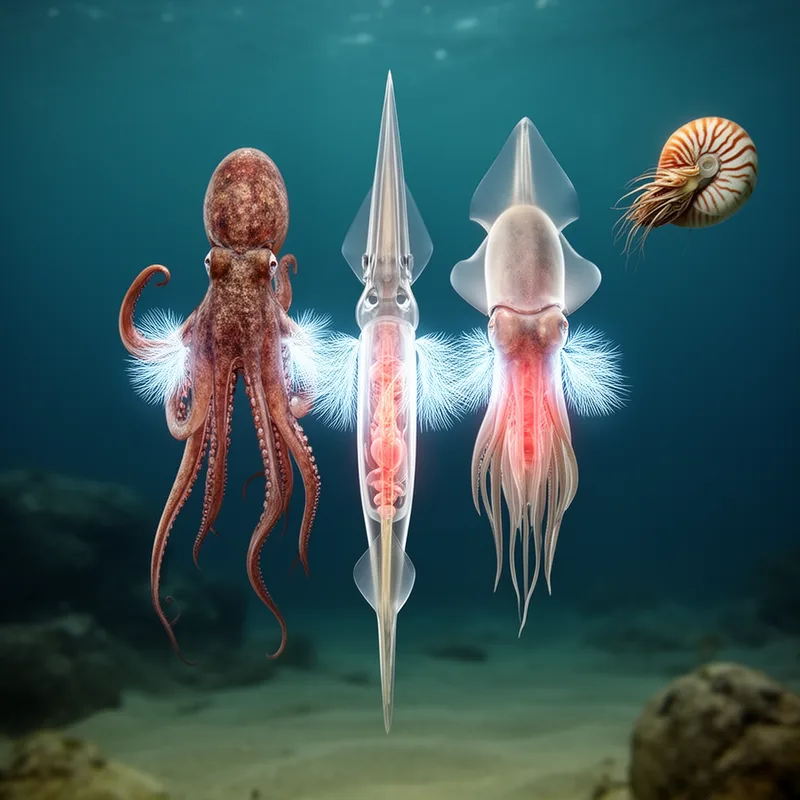
Dibranchiata
- noun
- /ˌdaɪˈbræŋkiˌɑːtə/
- Specialized
- Modern squids and octopuses belong to the Dibranchiata, distinguished by having two gills.
Examples
-
The only living cephalopods not in the Dibranchiata are the nautiluses.
-
The subclass Dibranchiata includes octopuses and squids.
-
Cuttlefish are classified within the Dibranchiata due to their anatomical features.
-
Did you know that Dibranchiata are more advanced than nautiluses?
-
Cuttlefish are classified within the Dibranchiata due to their anatomical features.
-
Modern squids and octopuses belong to the Dibranchiata, distinguished by having two gills.
-
The subclass Dibranchiata includes octopuses and squids.
Synonyms
A group of sea animals like octopuses, squids, and cuttlefish that have two gills
Surface Forms
Morphology
Dibranchiata = dibranchiate (opaque) = di + branchi + ata
The term is a specialized scientific/taxonomic formation using Greek combining forms and a Latin/Greek class ending, which is not transparently interpretable by general learners.
Etymology
Dibranchiata comes from di- 'two' and branchia 'gills', so it literally means 'two gills'. So, Dibranchiata names the group of cephalopods such as squids, octopuses and cuttlefish that have two gills.

