
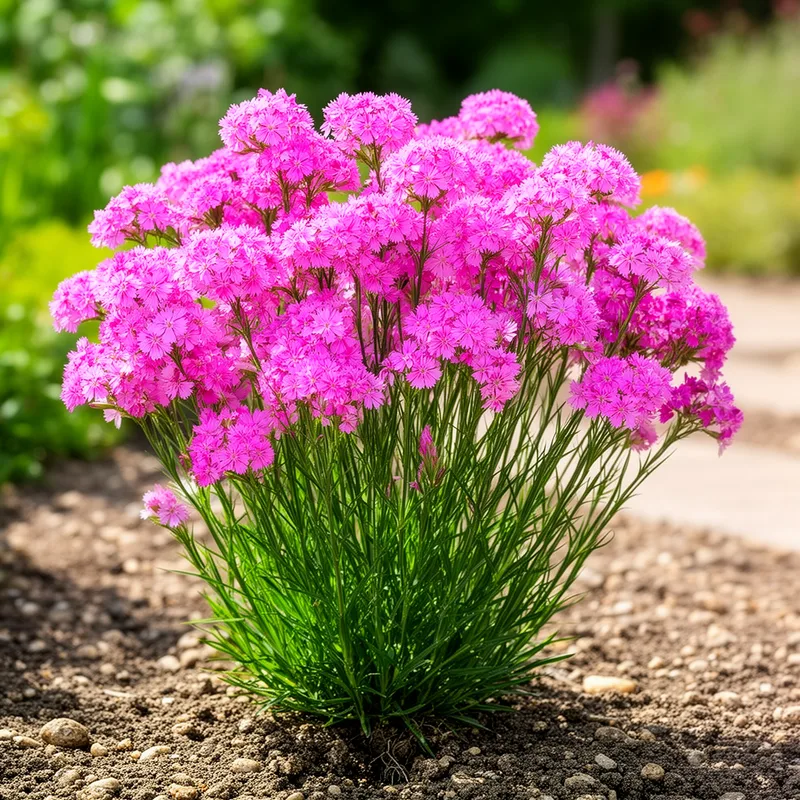
Dianthus latifolius
- noun
- Specialized
 :
clavel botón
:
clavel botón
- Gardeners often plant Dianthus latifolius for its attractive clusters of pink blossoms.
Examples
-
The Dianthus latifolius thrives in well-drained soil and full sunlight.
-
In my garden, I planted several Dianthus latifolius to attract butterflies.
-
Botanists have noted that Dianthus latifolius is closely related to sweet William.
-
The Dianthus latifolius blooms beautifully in the spring.
-
Gardeners often plant Dianthus latifolius for its attractive clusters of pink blossoms.
-
The Dianthus latifolius thrives in well-drained soil and full sunlight.
-
In my garden, I planted several Dianthus latifolius to attract butterflies.
Synonyms

A garden plant that grows every year with many small round pink flowers
Surface Forms
Morphology
Dianthus + latifolius
The name is compositional in that it combines the genus Dianthus (a flowering plant) with a Latin species epithet latifolius (literally ‘broad‑leaved’); a learner who knew both constituent meanings could infer it denotes a Dianthus species with broad leaves. However, the epithet is a Latin form rather than a standard English word and botanical binomials are specialized naming conventions, so the connection is only partially transparent to an average B1 learner.
Etymology
Dianthus latifolius comes from two old words: Dianthus meaning 'divine' and 'flower' and latifolius meaning 'broad' and 'leaf'. So the name gives a simple picture — a pretty, almost 'divine' flower with wide leaves, which fits this carnation-like plant.

