
Dianthus chinensis heddewigii
- noun
- Specialized
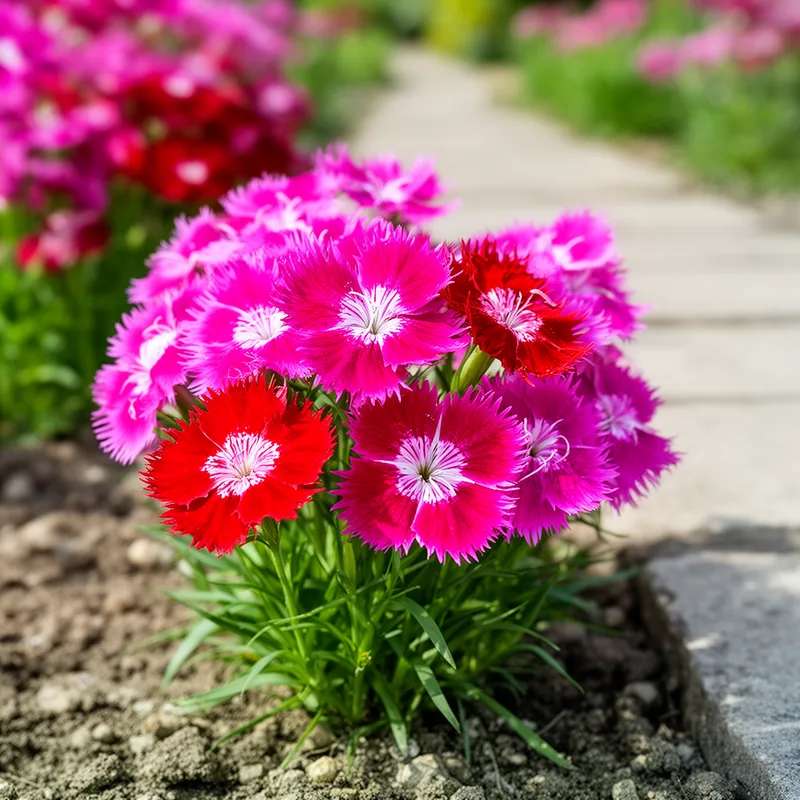
- I planted several Dianthus chinensis heddewigii along the walkway for their showy, fringed petals.
Examples
-
Many gardeners appreciate the bold colors of Dianthus chinensis heddewigii in summer borders.
-
The Dianthus chinensis heddewigii blooms beautifully in spring.
-
Dianthus chinensis heddewigii thrives in well-drained soil and full sunlight.
-
Can you believe how vibrant the Dianthus chinensis heddewigii looks?
-
Dianthus chinensis heddewigii produces beautiful flowers with jagged edges, making it a favorite in ornamental gardens.
-
Dianthus chinensis heddewigii is often planted in garden beds for its striking, fringed petals that attract butterflies.
-
In my garden, the Dianthus chinensis heddewigii adds vibrant color throughout the blooming season.
Surface Forms
Morphology
Dianthus + chinensis + heddewigii
The string is taxonomic and partly compositional: 'Dianthus' denotes a flowering plant and 'chinensis' normally signals Chinese origin, so a learner who knows those parts can infer it is a kind of China pink. However, 'heddewigii' is a proper cultivar epithet and botanical Latin naming conventions are domain-specific and not transparent to an average B1 learner, so the precise cultivar identity and ornamental details are not fully predictable.
Etymology
Dianthus chinensis heddewigii breaks into parts: Dianthus may come from Greek words meaning 'divine flower', chinensis means 'from China', and heddewigii likely honors a person named Heddewig. So the name gives a simple image — a 'divine' China pink variety named for someone, which makes it easier to remember this showy garden flower with jagged petals.

