

Devi
 9
8.8
9
8.8

- proper noun
- /ˈdeɪvi/
- Literature
- For example, the goddess Devi/Kali dances upon Shiva's body in order to activate Shiva's dormant male energy.
- the goddess Devi
- the mother goddess Devi
Examples
-
I thought on it a while, and I realized that that valley was soaked in the worship of Devi.
-
The mother goddess (Devi, Sakti) represents the primordial energy that subsumes the Siva and Vishnu principles.
Academic text (2001) -
Mohini Devi describes how learning about environmental pollution emerged from the immediate struggle in the workplace:
Academic text (2010) -
Deities at these holy places include Devi, the mother goddess, Kumara, Siva, and Vishnu.
Academic text (2001) -
In Hinduism, the divine feminine, for example, is often referred to by generic or universal names, such as "Devi" (mother goddess) or "Sakti" (primordial energy).
Academic text (2001) -
Through his compositions, Dikshita expresses worship of Siva, Vishnu, and the goddess Sakti or Devi, along, of course, with his own patron deity, Kumara.
Academic text (2001) -
Always, compositions were connected with important pilgrimage centers for each deity: Varanasi for Siva; Tirupati for Vishnu; Madurai for Devi/Sakti.
Academic text (2001) -
Hindus celebrate the festival of Navratri to honor Devi, the mother goddess and supreme power of the universe.
-
In many stories, Devi is depicted as both kind and fierce, embodying the dual nature of the divine.
-
The worship of Devi plays a significant role in Hindu culture, symbolizing the feminine aspect of creation.
Synonyms
 2
9.9
2
9.9
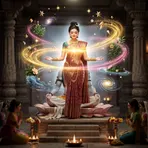
Sacred female energy in Hinduism that people see as Shiva's wife and creative power
Surface Forms
Etymology
Devi comes from Sanskrit and is the female form of deva, meaning 'god' or 'divine' and linked to a word for 'to shine'. Think of English words divine and deity to remember this: Devi is a 'shining' mother-goddess and the supreme power of the universe.