
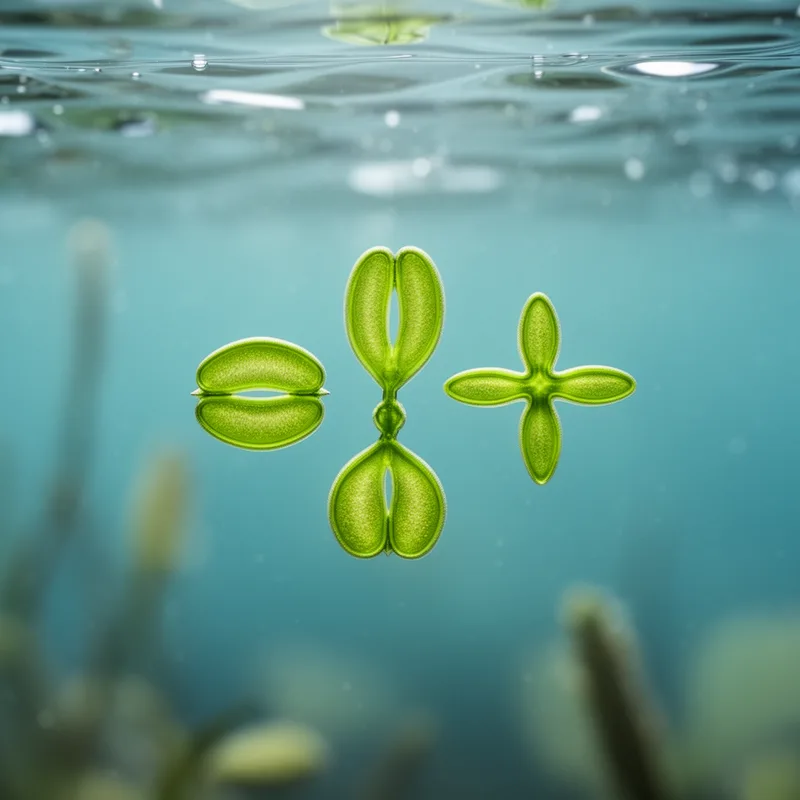
Desmidiaceae
- noun
- /dɛzˌmɪdiˈeɪʃiˌi/
- Specialized
- The beautiful, symmetrical shapes of Desmidiaceae are admired by many microscopists.
Examples
-
Members of the Desmidiaceae family are often found in acidic freshwater ponds.
-
Scientists study Desmidiaceae to better understand algae evolution and diversity.
-
The Desmidiaceae family includes many beautiful species.
-
Researchers study Desmidiaceae to understand freshwater ecosystems.
-
Members of the Desmidiaceae family are often found in acidic freshwater ponds.
-
The beautiful, symmetrical shapes of Desmidiaceae are admired by many microscopists.
-
Researchers study Desmidiaceae to understand their role in freshwater ecosystems.
Surface Forms
Morphology
Desmidiaceae = Desmidium (opaque) = desmidi + aceae
Formed from the genus stem plus the specialized botanical family suffix '-aceae'; this is a technical taxonomic formation not transparently meaningful to general learners.
Etymology
Desmidiaceae comes from the Greek root desmos, which means 'bond' or 'chain', and the ending -aceae, which means 'a plant family'. Many of these tiny green algae look like two halves joined together or form short chains, so the name helps you remember their 'joined' shapes and that they are a family of algae.

