
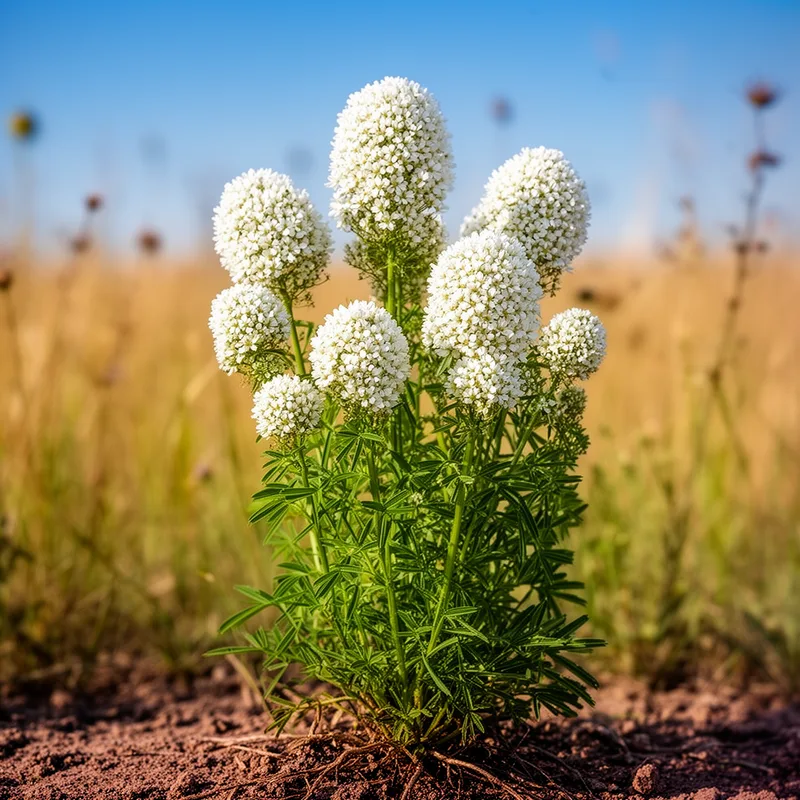
Desmanthus illinoensis
- noun
- /ˌdɛzˈmæθəs ˌɪlɪˈnoʊənˌsɪs/
- Specialized
- Conservationists are working to protect Desmanthus illinoensis as part of native prairie restoration projects.
Examples
-
Desmanthus illinoensis is often found in vibrant prairies, known for its clusters of small white flowers.
-
The Desmanthus illinoensis thrives in sunny prairies.
-
Desmanthus illinoensis thrives in well-drained soils across Midwestern prairies.
-
The roots of Desmanthus illinoensis are sometimes studied for their chemical properties.
-
Have you seen a Desmanthus illinoensis flower?
-
Farmers appreciate Desmanthus illinoensis for its ability to improve soil health in native landscapes.
-
Desmanthus illinoensis, also called prairie mimosa, creates beautiful blooms that attract pollinators.
Synonyms

A small wild plant with many white flowers that grows in grasslands
A tall prairie plant with groups of small white flowers and prickly stems
Surface Forms
Morphology
Desmanthus + illinoensis
This is a scientific Latin binomial (a genus name + species epithet) rather than a phrase built from everyday English words; the parts are proper names/Latin forms (e.g. -ensis) that a B1 learner would not interpret compositionally. The specific botanical meaning ('a perennial herb native to North American prairies') is domain-specific and not derivable from the constituent tokens without specialist knowledge.
Etymology
Desmanthus illinoensis comes from words that mean 'bundle' and 'flower' and from the place 'Illinois'. The name fits the plant: Desmanthus points to its tight, bundle-like heads of small white flowers and illinoensis shows it comes from the Illinois prairie, so people also call it 'prairie mimosa'.

