
Dendroica fusca
- noun
- Archaic
 :
Dendroica fusca
:
Dendroica fusca
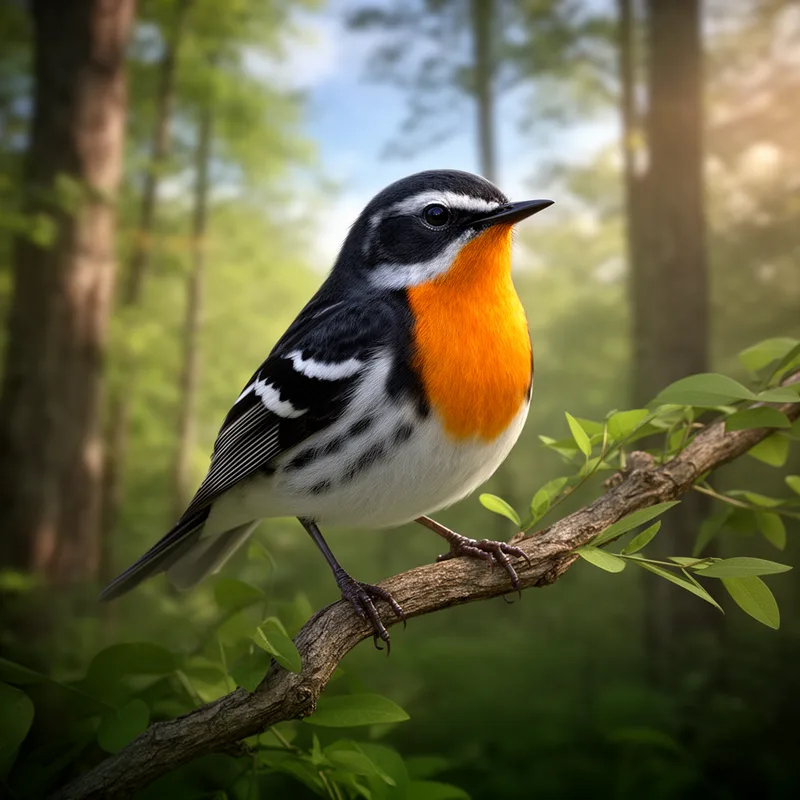
- The Dendroica fusca can be identified by its striking orange throat and bold black markings.
Examples
-
The vibrant colors of the Dendroica fusca make it a favorite among North American warbler species.
-
The Dendroica fusca is often found in coniferous forests.
-
During migration, birdwatchers eagerly seek out the Dendroica fusca in eastern forests.
-
Did you see a Dendroica fusca during your hike?
-
Birdwatchers often marvel at the beautiful Dendroica fusca, known for its colorful orange-and-black head.
-
During the spring migration, the Dendroica fusca can be spotted in many wooded areas of North America.
-
The Dendroica fusca is easily recognized by its distinctive black-and-white plumage and vibrant coloration.
Synonyms

A small North American bird with black and white feathers and a bright orange head and throat
Surface Forms
Morphology
Dendroica + fusca
This is a Linnaean binomial (genus + species epithet) rather than a compositional English phrase; the parts are scientific names (one not even found in the dictionary) and do not combine to form an interpretable everyday meaning. Even if a learner recognized Latin roots, the species label is essentially arbitrary and does not transparently yield 'Blackburnian warbler' or the described bird, so it would be unpredictable for a B1 learner.
Etymology
Dendroica fusca is the scientific name for the Blackburnian warbler. The name uses Dendroica, from old words for 'tree' because the bird lives in trees, and fusca, meaning 'dark' or 'dusky', so the name helps you remember a small tree-dwelling warbler with a dark orange-and-black throat.

