

Delonix regia


 1
9.5
1
9.5
- noun
- Specialized
- The Delonix regia is often called the flamboyant tree.
Examples
-
During spring, the Delonix regia is covered in a spectacular display of scarlet flowers.
-
Gardeners value the Delonix regia for its wide canopy and ornamental appeal.
-
The Delonix regia brightens the city streets every summer with its vivid blossoms.
-
Many gardeners love planting Delonix regia for its stunning flowers.
-
The Delonix regia is often planted in parks for its stunning red flowers.
-
In many tropical cities, the Delonix regia adds vibrant color to the landscape.
-
During spring, the Delonix regia transforms the gardens with its bright orange blossoms.
Synonyms
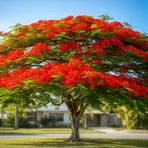
A tropical tree with wide branches and bright red flowers
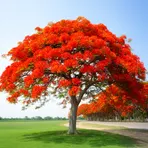
A tropical tree with large bright red or orange flowers

A tropical tree with large scarlet and orange flower clusters and a wide canopy
Surface Forms
Morphology
Delonix + regia
Delonix regia is a Latin scientific name (a binomial) functioning as a proper noun rather than an English compound; its specific meaning as a species of showy ornamental tree is not compositionally derived from the listed constituents, especially since 'regia' has no dictionary entry here. Botanical Latin labels are language-specific conventions and do not yield a predictable everyday meaning for a B1 learner, so the expression is not transparent.
Etymology
Delonix regia may get its name from Latin: regia means 'royal'. The tree's bright, crown-like clusters of red and orange flowers look like a king's robe or crown, so that's why the name fits this showy tropical tree.