
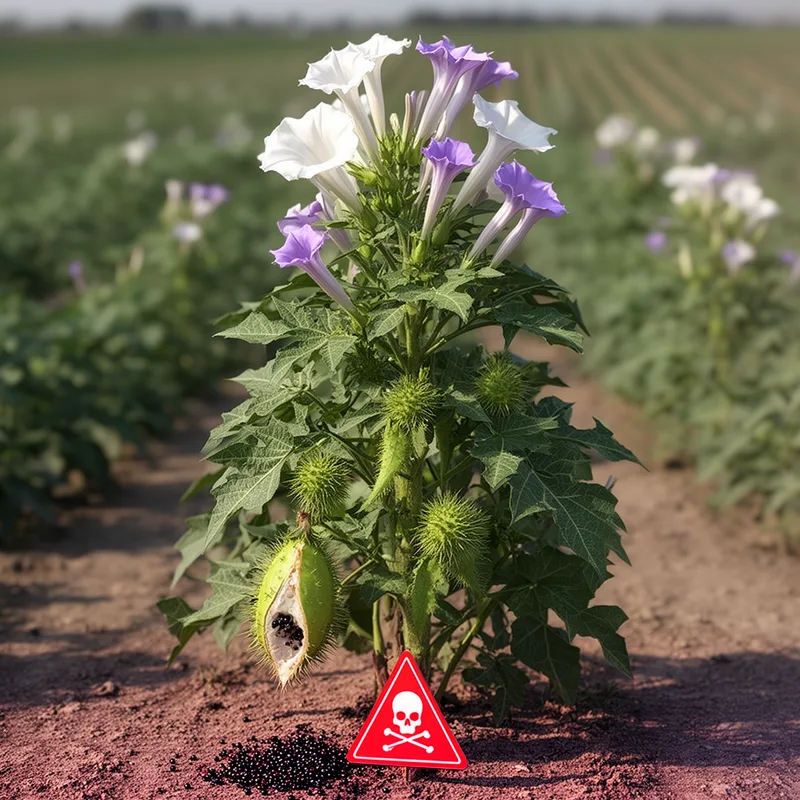
Datura stramonium
- noun
- /dəˈtʊrə strəˈmoʊniəm/
- Specialized
- The seeds of Datura stramonium are highly toxic and should never be ingested.
Examples
-
Researchers discovered that Datura stramonium contains compounds used historically in traditional medicine, though it is extremely dangerous.
-
Many rural fields are invaded by Datura stramonium during the late summer.
-
The Datura stramonium plant is known for its toxicity.
-
Many gardeners avoid planting Datura stramonium due to its poisonous nature.
-
The seeds of Datura stramonium are extremely poisonous and can cause severe illness if eaten.
-
Many gardeners avoid planting Datura stramonium because its leaves and flowers contain deadly toxins.
-
In some areas, Datura stramonium is considered a dangerous weed due to its highly toxic properties.
Synonyms

A tall poisonous plant with bad-smelling leaves, large trumpet-shaped flowers, and spiky fruit
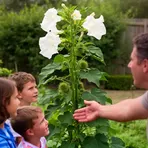
A tall plant with large trumpet-shaped flowers and poisonous leaves and fruits

A poisonous tropical plant with big trumpet-like flowers, prickly fruits, and leaves that smell very bad
Surface Forms
Morphology
Datura + stramonium
This is a Latin binomial (a proper name) identifying a particular species of the genus Datura. A B1 learner who knows 'Datura' can infer it is a type of Datura plant, but 'stramonium' is not an English lexical item and does not contribute a predictable descriptive meaning (height, habitat, toxicity) to the phrase. The construction is therefore partly informative (species-of relation) but not fully compositional or immediately interpretable, so semi-transparent is appropriate.
Etymology
Datura stramonium has big trumpet-shaped flowers and round, spiky seed pods that hide many tiny, dangerous seeds. People long ago used the plant in old medicines and rituals and sometimes had strange visions or became very sick, so the plant became known as 'poisonous'.

