
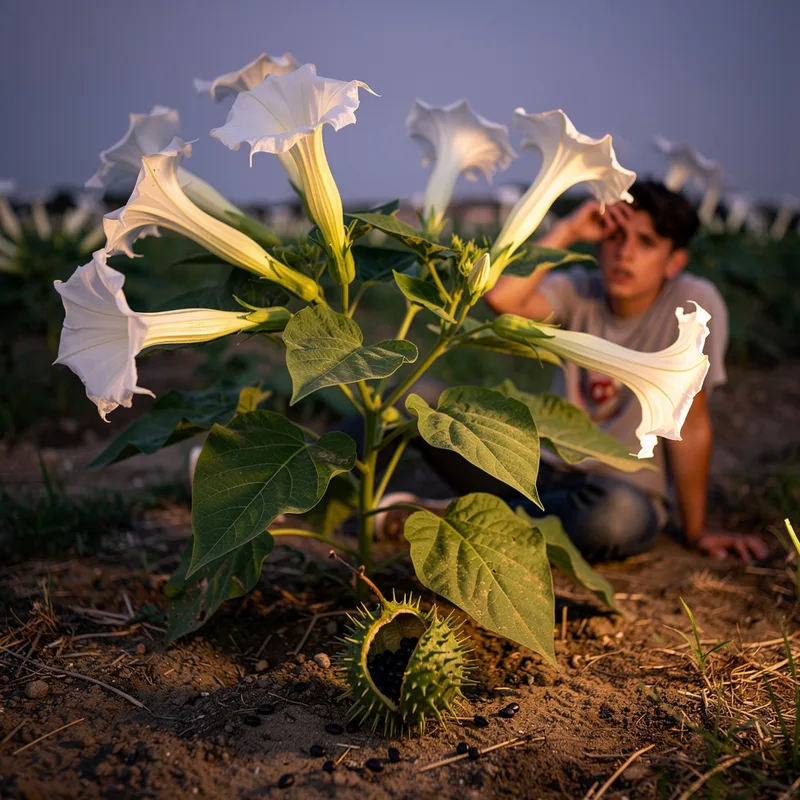
Datura
 2
9.9
2
9.9

- noun
- /dəˈtʊrə/
- NSFW
- The sacred datura, or moonflower, blooms only at night, its white, trumpet-shaped flowers as rich in ghostly dreams as they are in fragrance.
- sacred datura
- Datura blooms
- Datura leaf
Examples
-
Three types of narcotic effects have been identified with respect to the use of datura.
Academic text (1994) -
Alcohol, tobacco, and caffeine, the world's most popular psychoactive compounds, are not generally referred to as drugs, and neither are plant-based deliriants such as datura or belladonna.
Academic text (2013) -
I mean, what's the trip like on datura?
-
Many gardeners choose datura for its large, trumpet-shaped flowers and fragrance.
-
Despite its beauty, datura is a poisonous plant that can be harmful if ingested.
-
In some cultures, datura is used for its hallucinogenic properties during rituals.
Synonyms


 1
9.9
1
9.9
A plant with spiky fruit and trumpet-shaped flowers that can be poisonous
Compounds
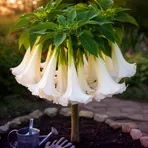
- Specialized
A South American plant grown for its large sweet smelling trumpet shaped flowers
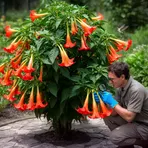
- Specialized
A South American shrub with large orange-red trumpet-shaped flowers that are poisonous
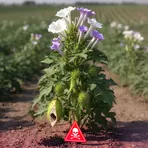
- Specialized
A tall yearly weed with strong-smelling leaves and white or purple trumpet flowers that is very poisonous

- Specialized
South American plant grown for large trumpet-shaped flowers that smell at night called angel's trumpet
Surface Forms
Etymology
Datura comes from an old Indian name, dhattūra, which reached Europe and English through Spanish. People once called the plants 'thorn apple' because of the round fruit, and since many Datura species are poisonous and can cause strong, dream-like visions, the name is linked to both traditional medicine and danger.