
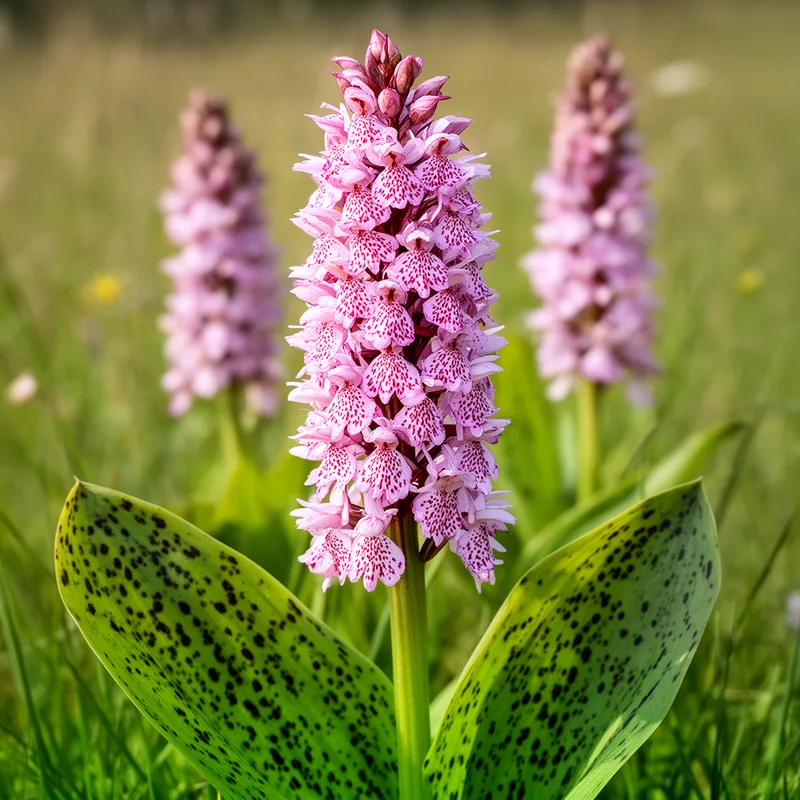
Dactylorhiza maculata fuchsii
- noun
- Specialized
- The Dactylorhiza maculata fuchsii is often found thriving in moist European meadows during the summer.
Examples
-
Botanists admire the distinctive spotted leaves of Dactylorhiza maculata fuchsii when surveying wild orchids.
-
Hikers came across several clumps of Dactylorhiza maculata fuchsii blooming in the nature reserve.
-
The Dactylorhiza maculata fuchsii is a beautiful sight in spring.
-
Have you seen a Dactylorhiza maculata fuchsii in bloom?
-
Hikers came across several clumps of Dactylorhiza maculata fuchsii blooming in the nature reserve.
-
Botanists admire the distinctive spotted leaves of Dactylorhiza maculata fuchsii when surveying wild orchids.
-
The Dactylorhiza maculata fuchsii is often found thriving in moist European meadows during the summer.
Synonyms
A European wild orchid with spotted leaves and pale pink to white flowers with dark spots

A European wild flower with long spotted leaves and pink or white flowers with dark spots
Surface Forms
Morphology
Dactylorhiza + maculata + fuchsii
This is a scientific Latin taxonomic name (genus + specific and subspecies epithets), not a compositional English phrase. Even though 'maculata' can mean 'spotted' in Latin and 'fuchsii' is an eponym, an average B1 learner who only knows the listed constituents would not be able to derive the full botanical meaning 'a subspecies of the heath spotted-orchid'.
Etymology
Dactylorhiza maculata fuchsii comes from old words: Dactylorhiza means 'finger root' because its roots look like fingers, maculata means 'spotted' for its leaves, and fuchsii is named after a botanist called Fuchs. So the name helps you picture a spotted orchid with finger-like roots and remember the scientist who studied it.

