
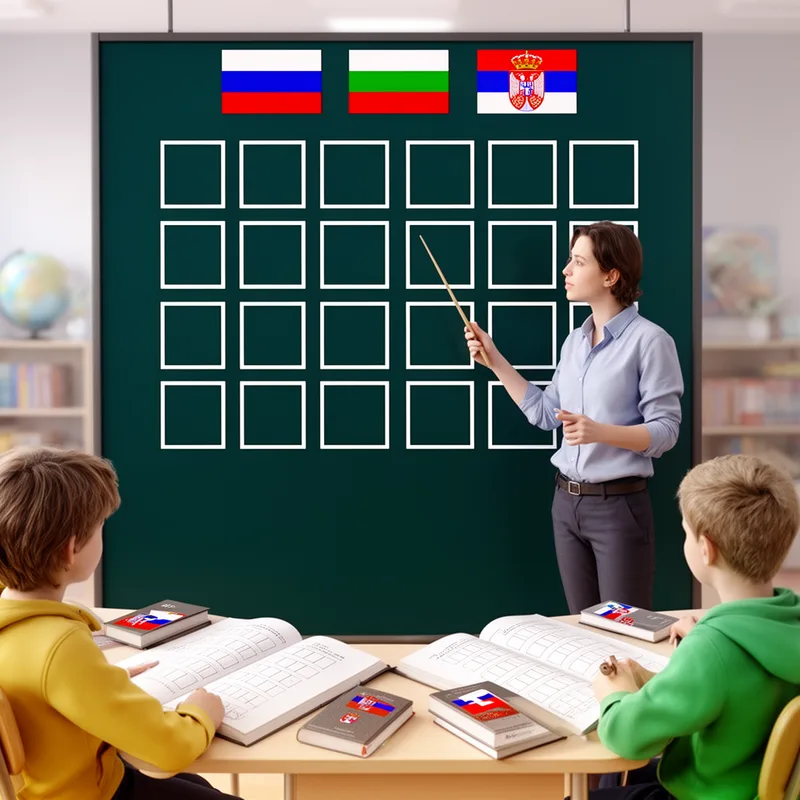
Cyrillic alphabet


 1
5.9
1
5.9
- noun
- /sɪˈrɪlɪk ˈælfəˌbɛt/
- Few people there speak English, and the street signs are in the Cyrillic alphabet.
- use the Cyrillic alphabet
Examples
-
But your notes, they're written in Russian and the Cyrillic alphabet.
-
The Cyrillic alphabet has a particular appeal.
Fiction book (1995) -
The key here seems to be figuring out the order of the letters in the Cyrillic alphabet and writing them down as a reference.
Blog text (19) -
It's a Cyrillic alphabet.
-
They will select a librarian and then be given a list of books written in the Cyrillic alphabet.
Blog text (19) -
In the "Alphabetized" option, they have to dive into the massive card catalog of the Russian State Library, Cyrillic alphabet and all.
Blog text (3) -
The Serb use of the Cyrillic alphabet is mainly an attempt to attach a positive identity to their "Easternness."
Academic text (1997) -
The Soviets instituted a Cyrillic alphabet and relocated Russian-speaking populations from other parts of the USSR there.
Academic text (2006) -
In Russia, children learn to read and write in the Cyrillic alphabet from an early age.
-
Many people find it challenging to learn the Cyrillic alphabet because the letters differ significantly from the Latin script.
Synonyms
 3
7.6
3
7.6
An alphabet used to write languages like Russian and Bulgarian
Surface Forms
Morphology
This is a straightforward compositional noun phrase: 'Cyrillic' names a particular writing system and 'alphabet' means a set of letters, so a learner who knows both constituents can derive that it refers to the alphabet of the Cyrillic script. The pattern (type-of + alphabet) is cross-linguistically transparent and follows normal English modification, making the meaning immediately comprehensible.
Etymology
Cyrillic alphabet takes its name from Saint Cyril, who helped bring writing to the Slavic people long ago. Monks adapted Greek letters and added new signs for Slavic sounds to make an alphabet, so the name now means the 'set of letters' used for Russian, Bulgarian and other Slavic languages.