

Cyperus papyrus
- noun
- Specialized
- The ancient Egyptians famously used Cyperus papyrus to make scrolls for writing and recording information.
Examples
-
The ancient Egyptians used Cyperus papyrus to make paper.
-
Did you know Cyperus papyrus grows near the Nile?
-
Gardening enthusiasts sometimes grow Cyperus papyrus in water features for its striking appearance.
-
Historians study the remains of Cyperus papyrus manuscripts to learn about early civilizations.
-
The ancient Egyptians famously used Cyperus papyrus to make scrolls for writing and recording information.
-
Historians study the remains of Cyperus papyrus manuscripts to learn about early civilizations.
-
Gardening enthusiasts sometimes grow Cyperus papyrus in water features for its striking appearance.
Synonyms

 1
8.9
1
8.9

A tall water plant with a stiff stem that grows along the Nile

A tall plant from the Nile whose stems were used long ago to make papyrus

A tall plant from the Nile valley with strong stems used to make paper and mats
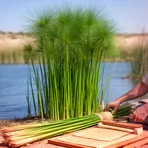
A tall marsh plant people use to make papyrus
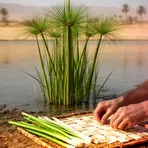
A tall marsh plant by the Nile whose stems are used to make paper
Surface Forms
Morphology
The name is a straightforward taxonomic binomial combining the genus 'Cyperus' with the species identifier 'papyrus', so the meaning (the papyrus sedge) is directly derivable from the constituent words. As a scientific naming pattern common across languages, a learner who knows both constituents would readily understand this refers to that particular tall Nile sedge.
Etymology
The noun Cyperus papyrus names a tall river plant whose thick stems were cut, soaked, and pressed to make the writing material called 'papyrus', so the plant's name became the word for early paper.